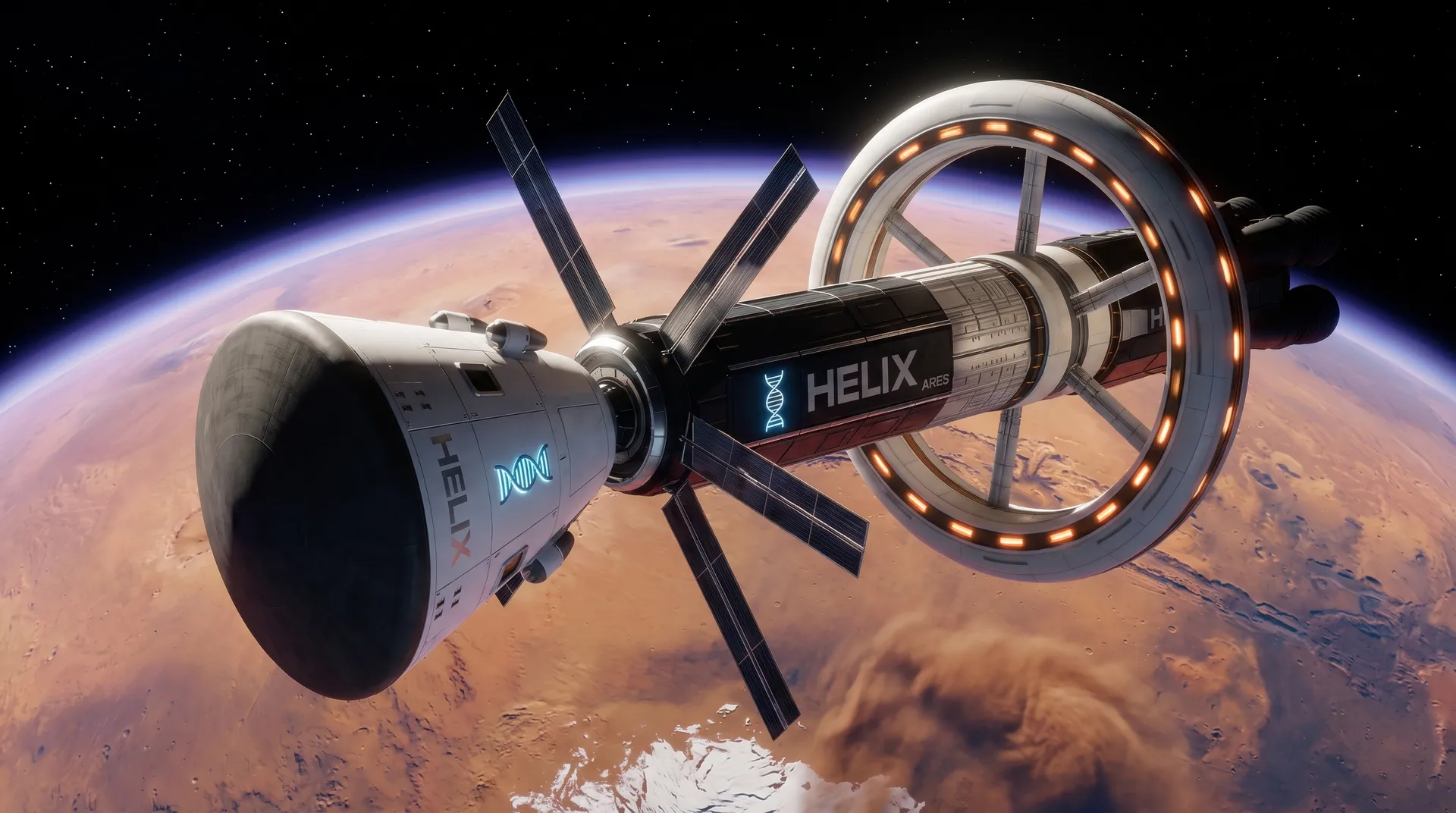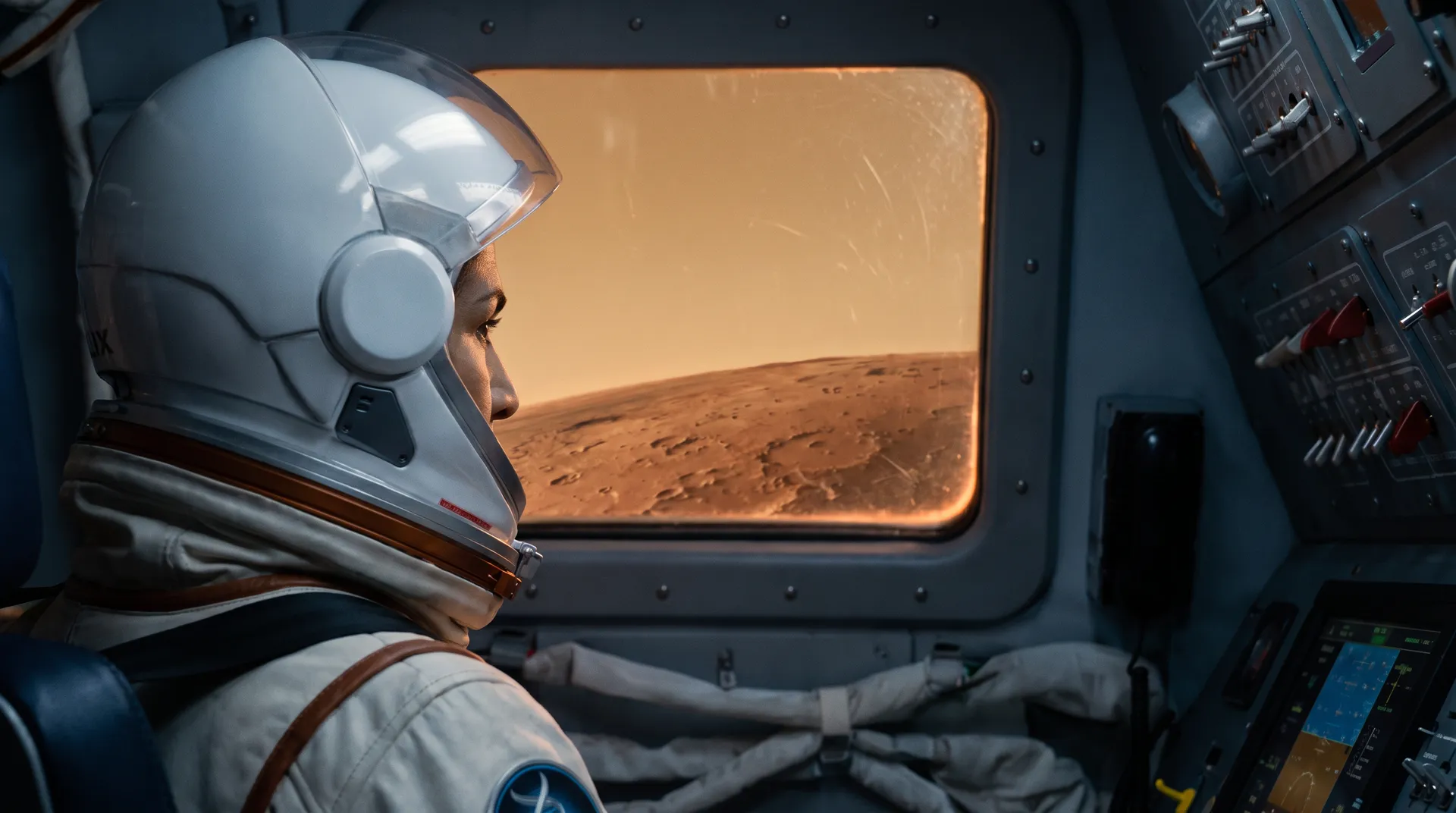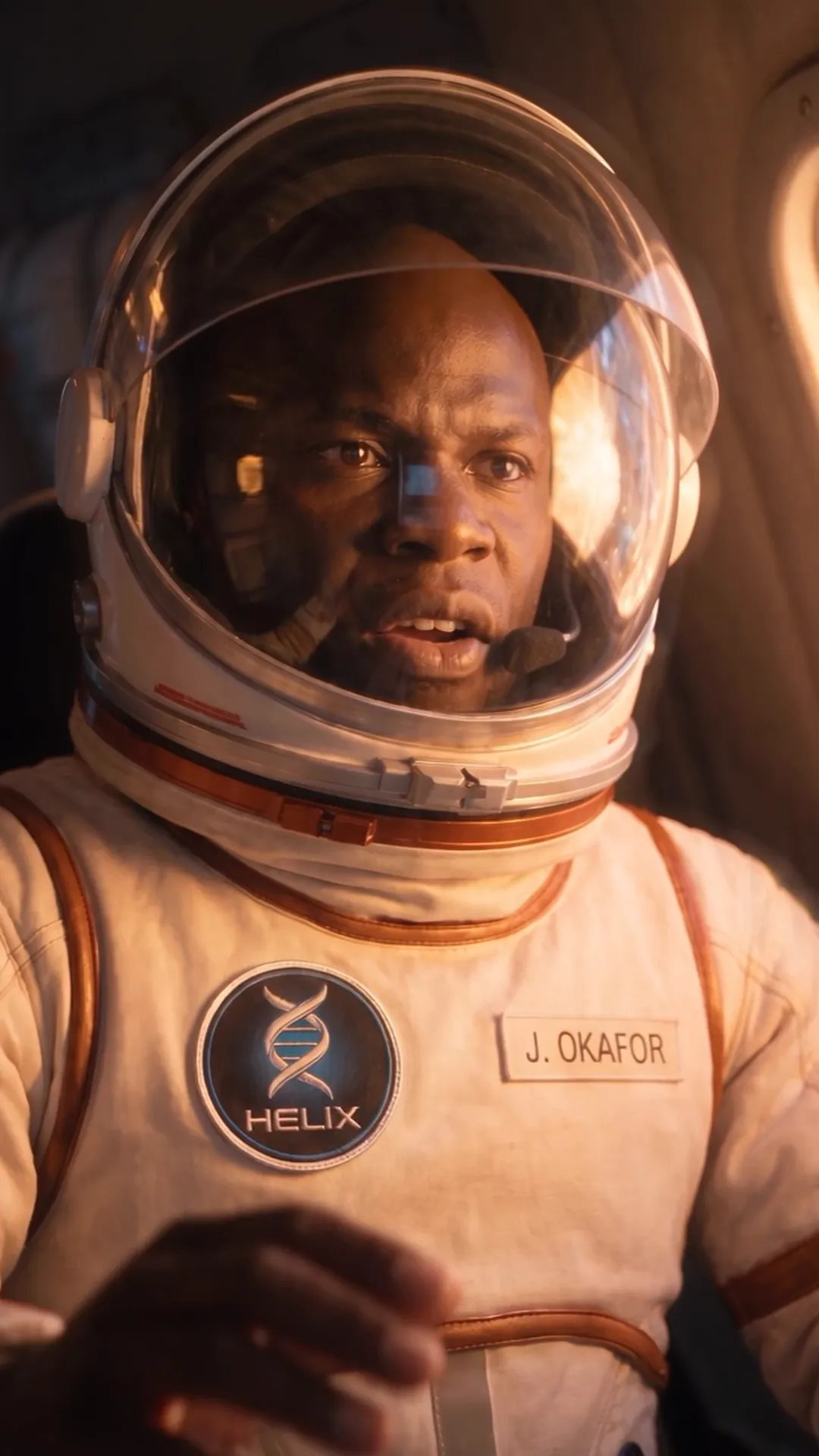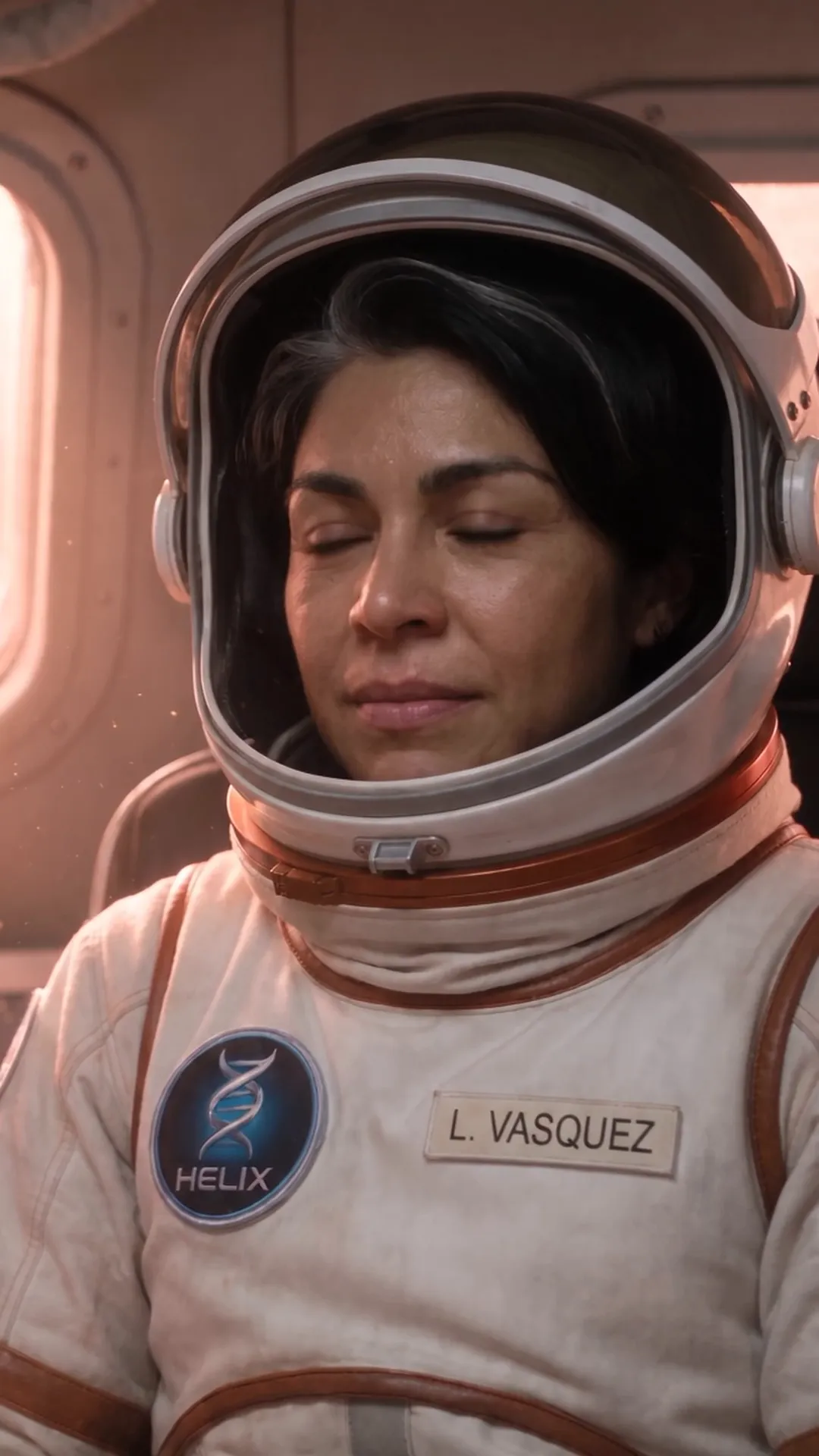
The capsule is still docked at the spine when the track begins, a small white shape clamped to the long body of the Ares with Mars filling the sky beneath them both. Inside it, four people sit strapped into launch suits with their helmets sealed, exactly as they sat on the pad on Earth seven months ago. The difference is the colour of the light coming through the window.
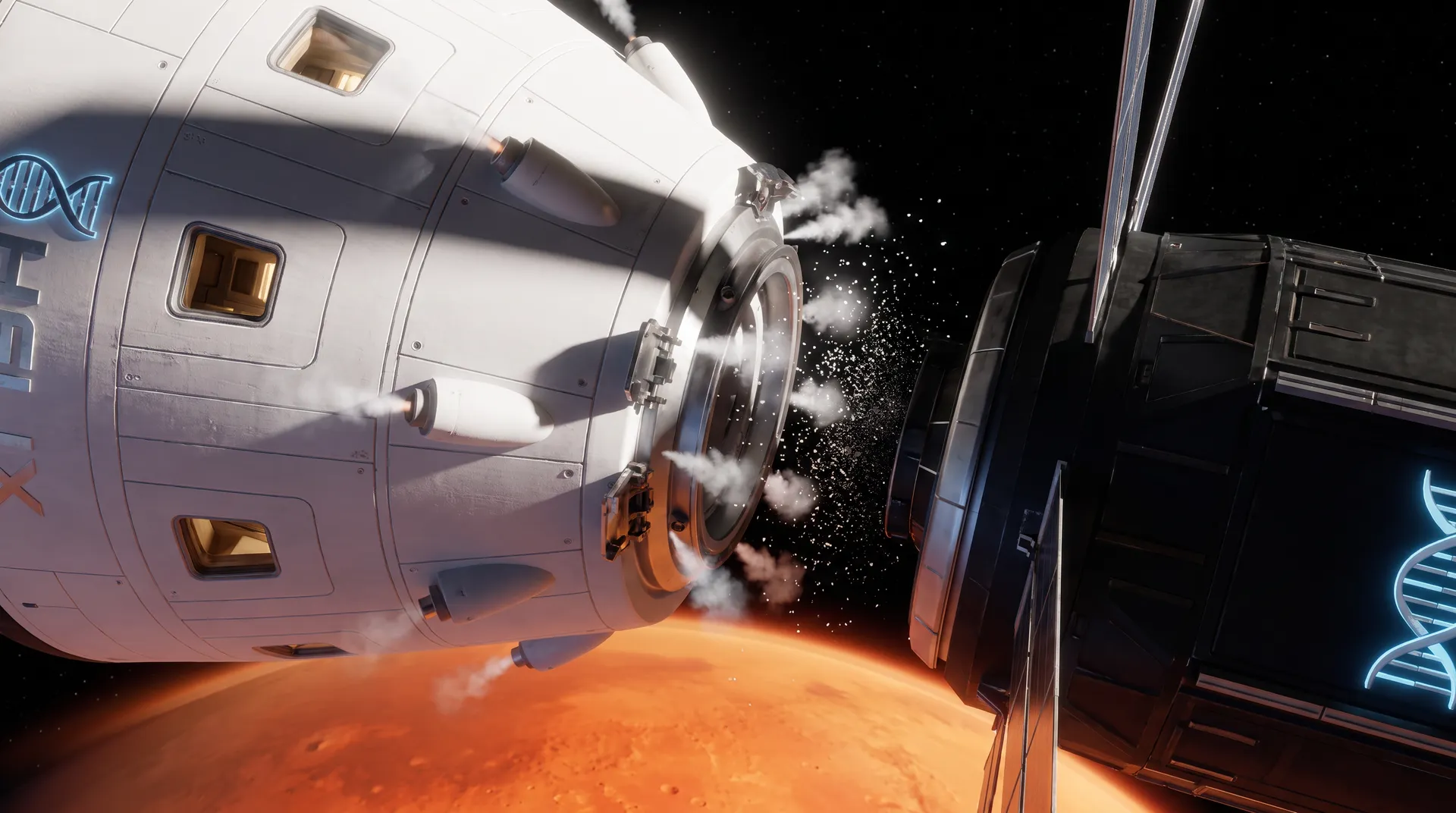
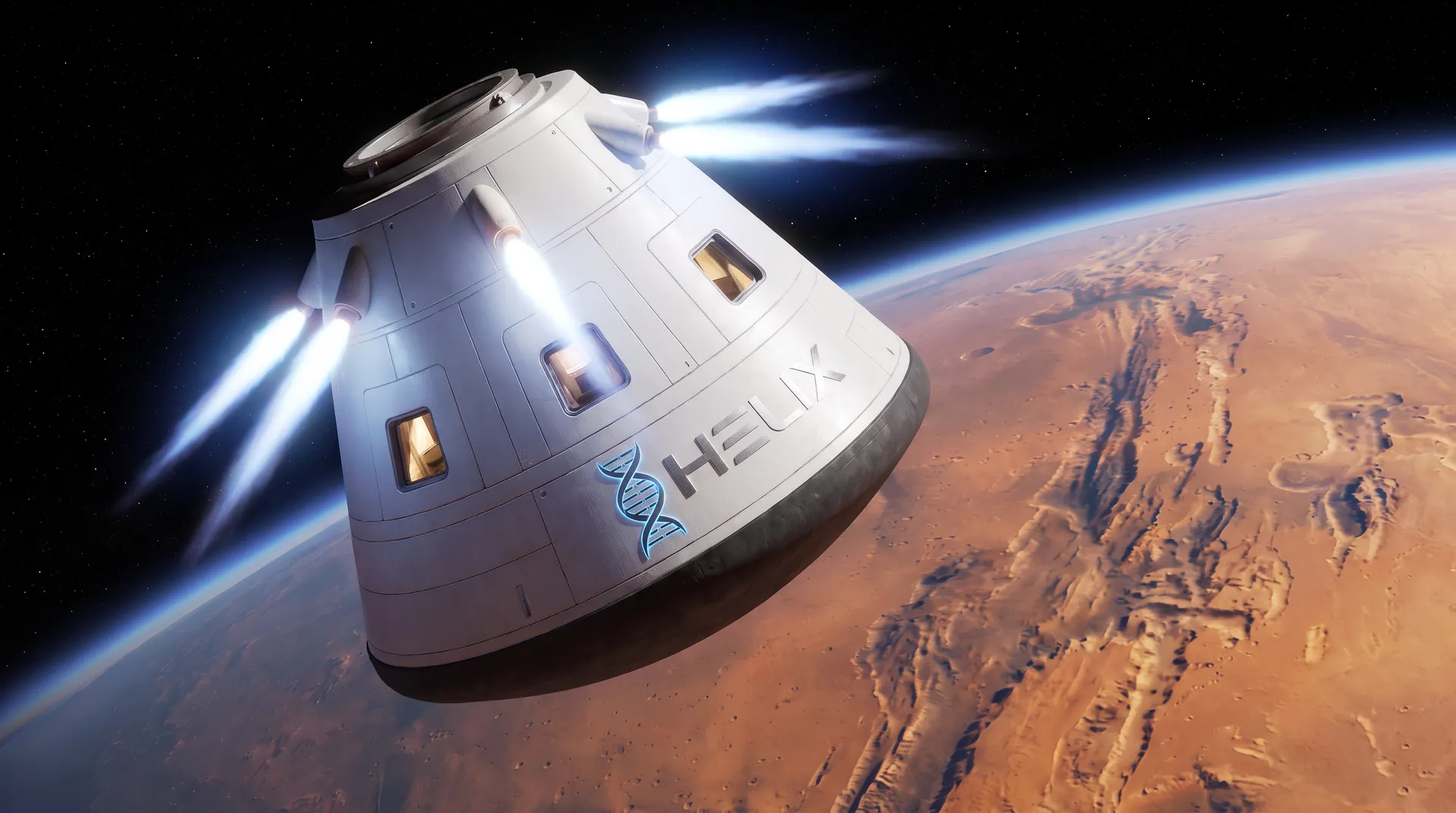
Mikhail's gloved hand rests on a guarded switch marked UNDOCK. He flips it. The clamps release with a thud they feel in their spines, and the capsule backs away. Through her small window Lena watches the Ares recede, their home for half a year shrinking to a bright cross of solar panels, then to a point. The capsule turns, heat shield toward the planet, thrusters puffing white. For a moment they are entirely alone above Mars.
A countdown fills the display. DEORBIT BURN. Three. Two. One.
The music drops out.
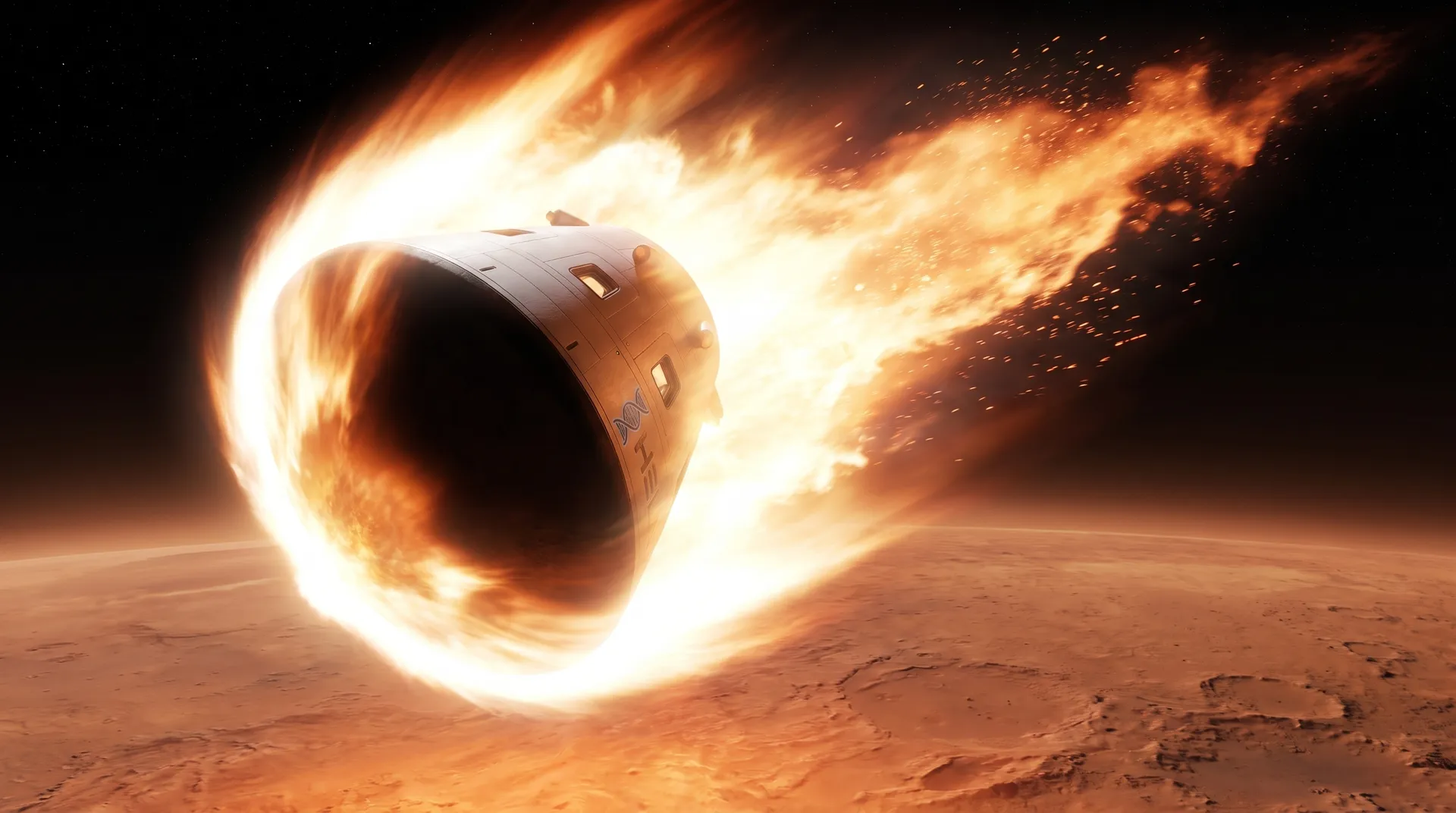
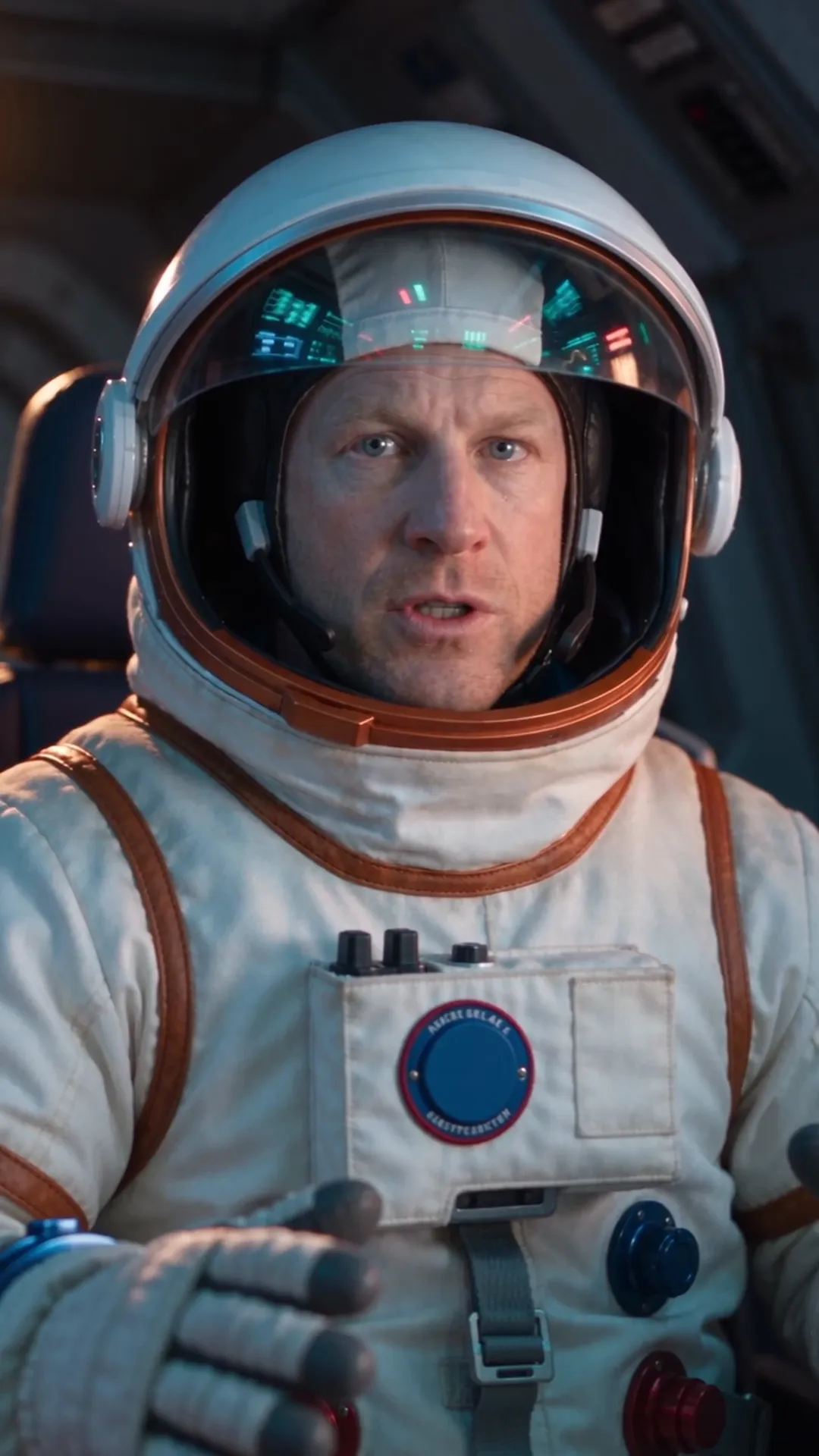
The main engine lights and the capsule falls. James reads numbers over the helmet comms, altitude and velocity and angle, his voice steady in the way of a man concentrating very hard on being steady. At the edge of the atmosphere a faint pink glow forms on the heat shield, pretty, almost gentle. Inside, the first rumble, and pink light creeping across the cabin walls.
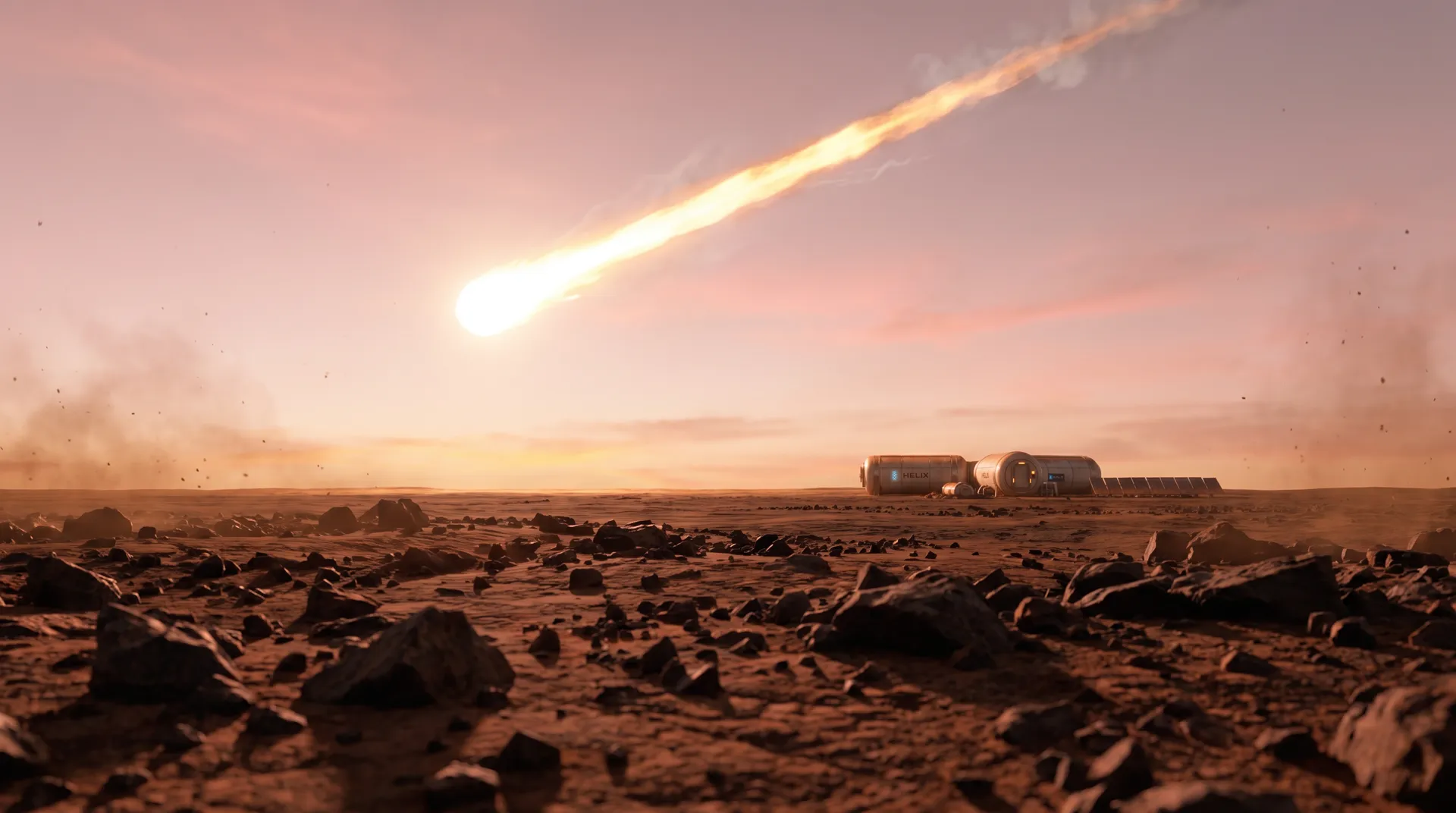
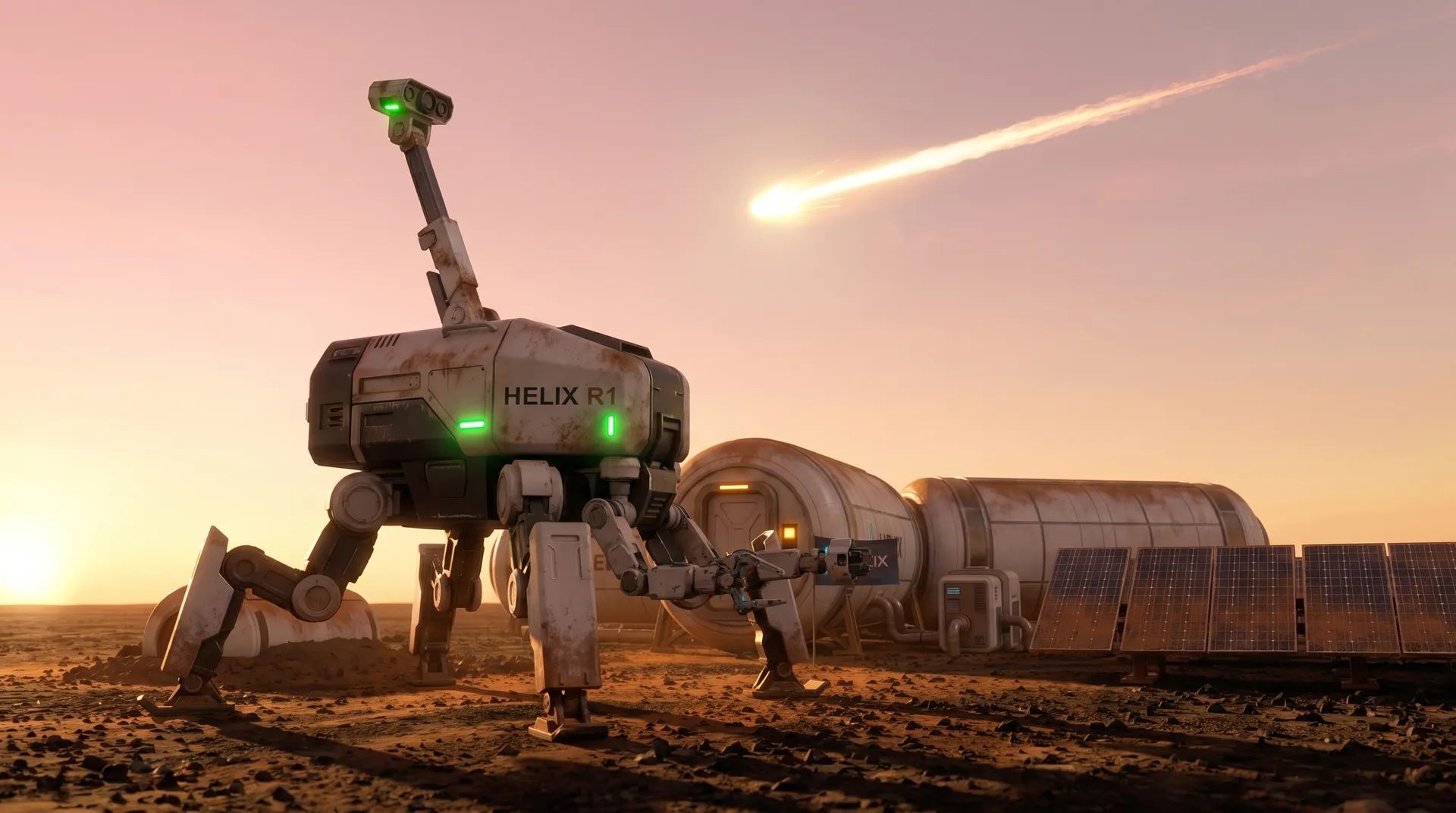
Then the plasma builds. Orange, then white. Mikhail's eyes lock on instruments that flicker and stutter. A screen reads HEAT SHIELD 1,600 C, G-LOAD climbing. Lena's hands close on her harness straps. Far below, on the surface, HELIX-R1 stands at the edge of the landing pad and tilts its head up as a fireball streaks across the dawn sky.
The interior shakes so hard the frame can barely hold it. White light pours through the window. Yuki closes her eyes. The comms panel goes dark: SIGNAL LOST. PLASMA BLACKOUT. James is shouting readings now, his face pulled sideways by the G-force, and Mikhail is fighting the controls, the cabin a blur of vibration. Nobody on Earth can hear them. For four minutes there is no one in the universe who knows whether they are alive.
And then, without warning, silence. The plasma falls away and the window shows a calm butterscotch sky.
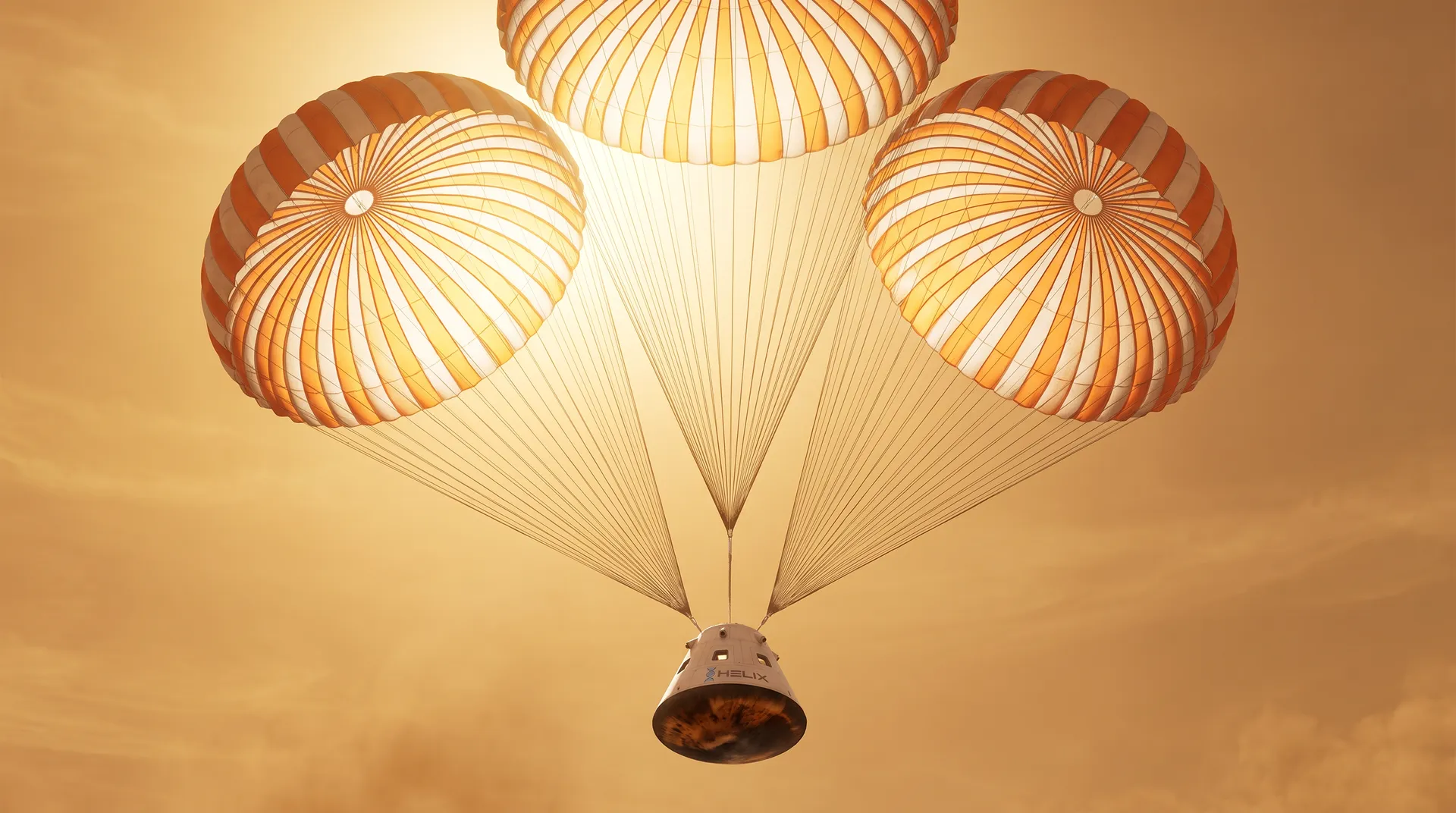
BANG. The drogue chute bursts out and the music slams back in with it. The crew are thrown against their harnesses. Three main parachutes bloom overhead against that impossible sky, and the heat shield drops away, tumbling toward red ground that is suddenly very close: crater fields, canyons, dust, rushing up.
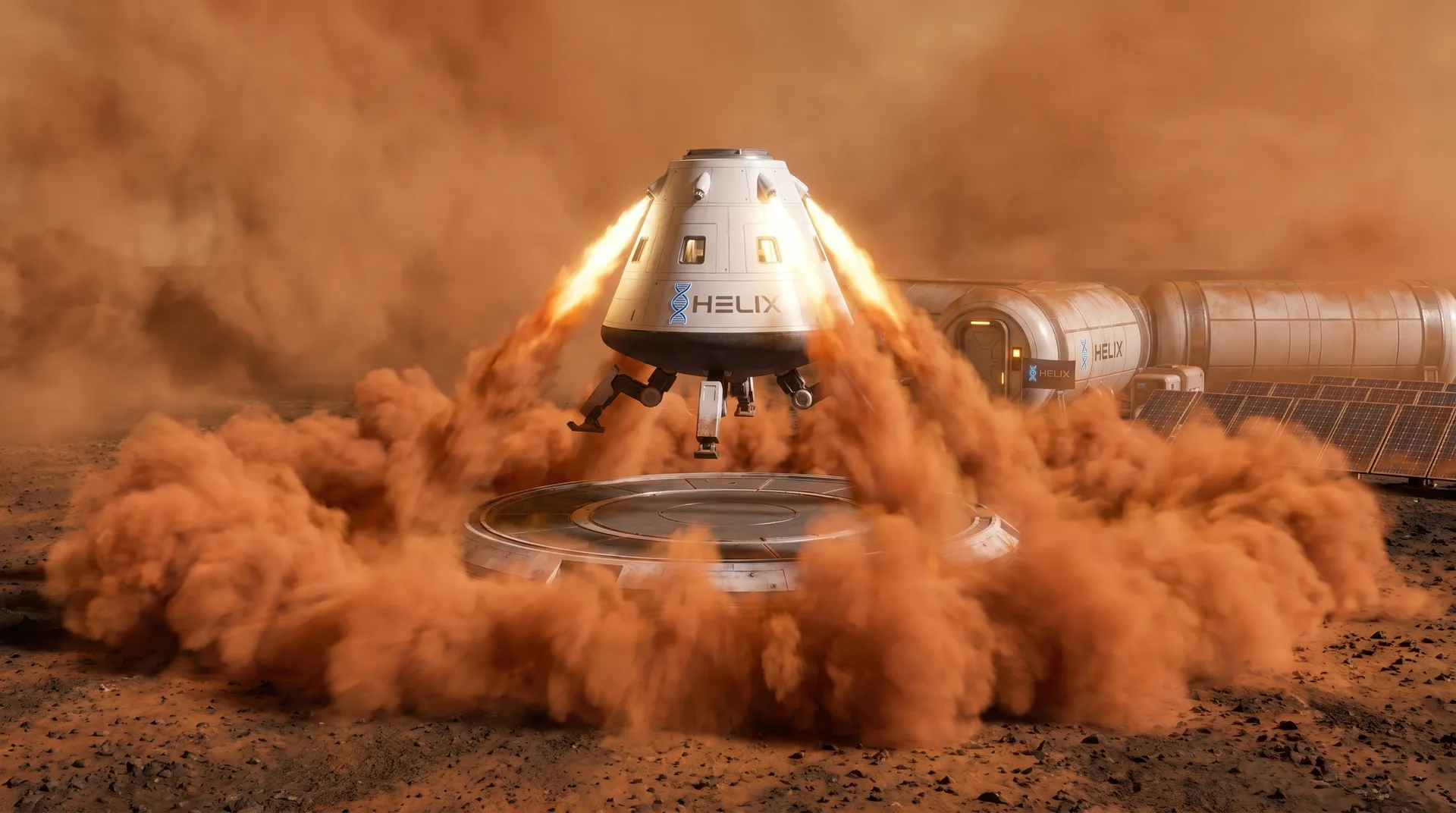
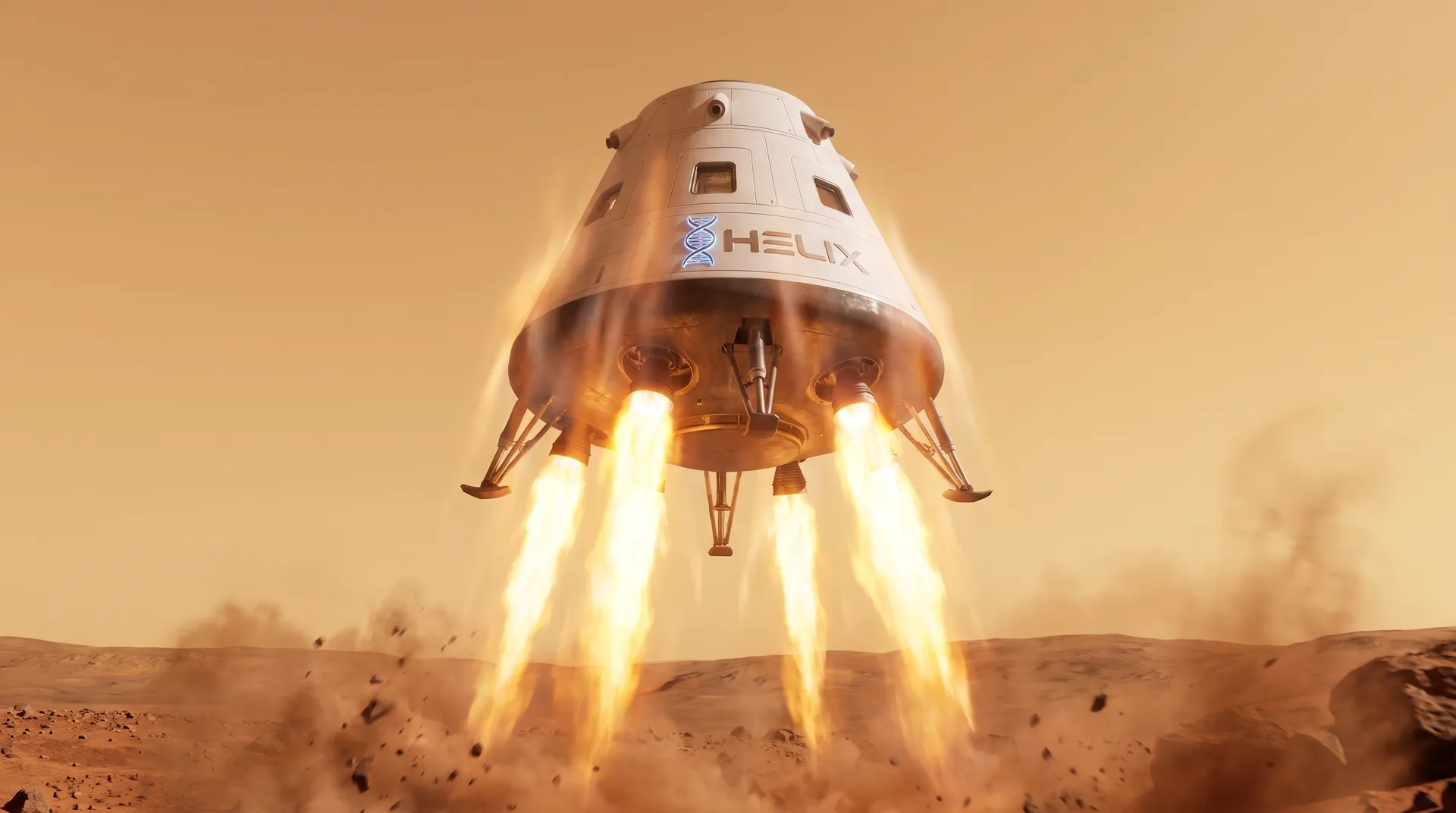
Mikhail's hand is on the throttle. The chutes cut loose, the retro-rockets ignite, and from below the capsule is a white shape riding four columns of fire. Through the window the outpost slides into view, domes and solar arrays and a swept pad, with small metal figures gathered at its edge. Fifty metres. Forty. Thirty. Lena's face is lit orange by the rocket glare. The robots shield their sensors as the dust lifts. The landing legs unfold.
A ring of red dust explodes outward.
TOUCHDOWN. The legs compress, the dust cloud rolls over everything and swallows it, and then the engines cut and the shaking stops. The four of them sit frozen, not yet believing it.
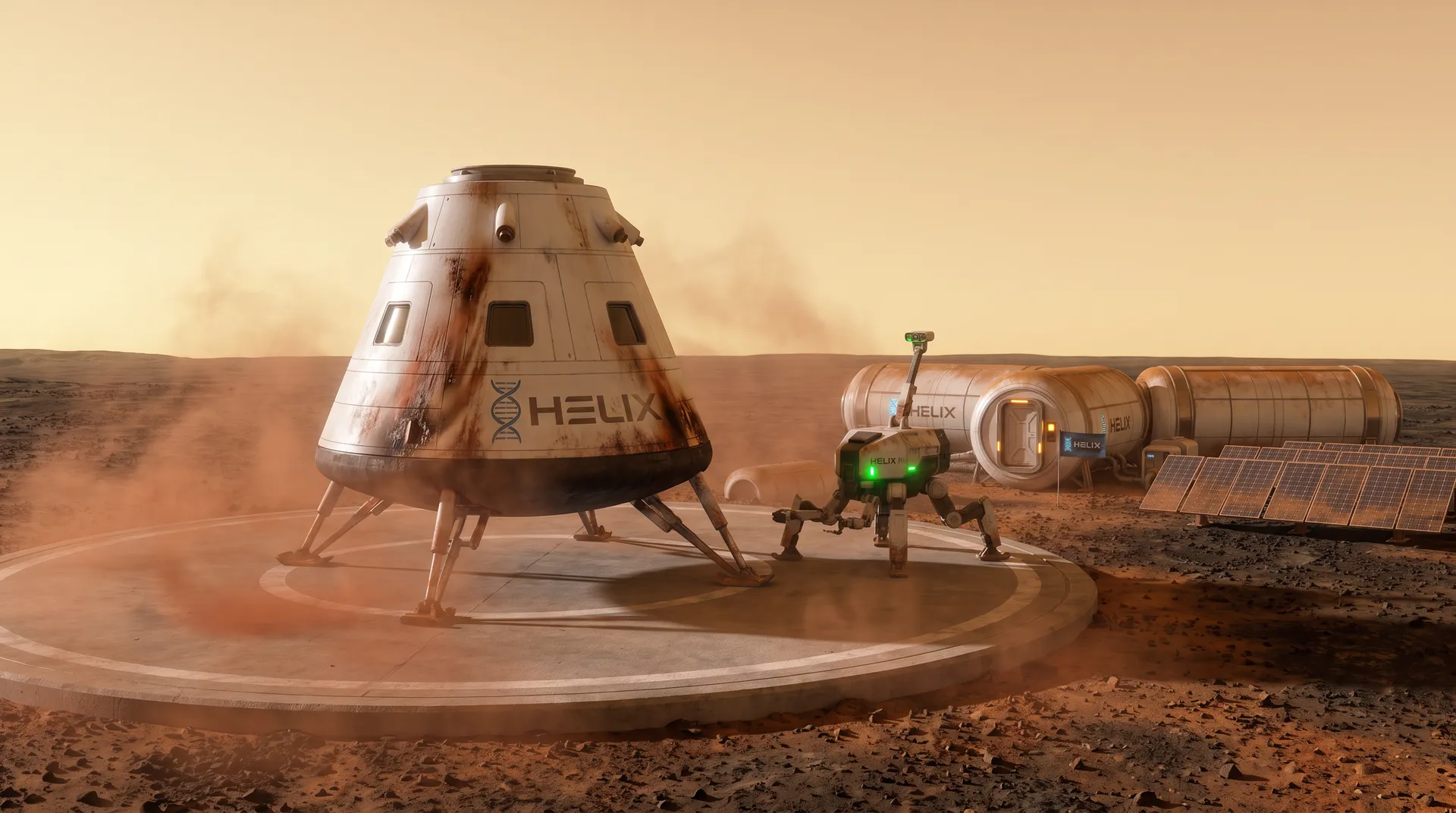
The dust settles. The capsule stands upright, beside the outpost, on Mars.
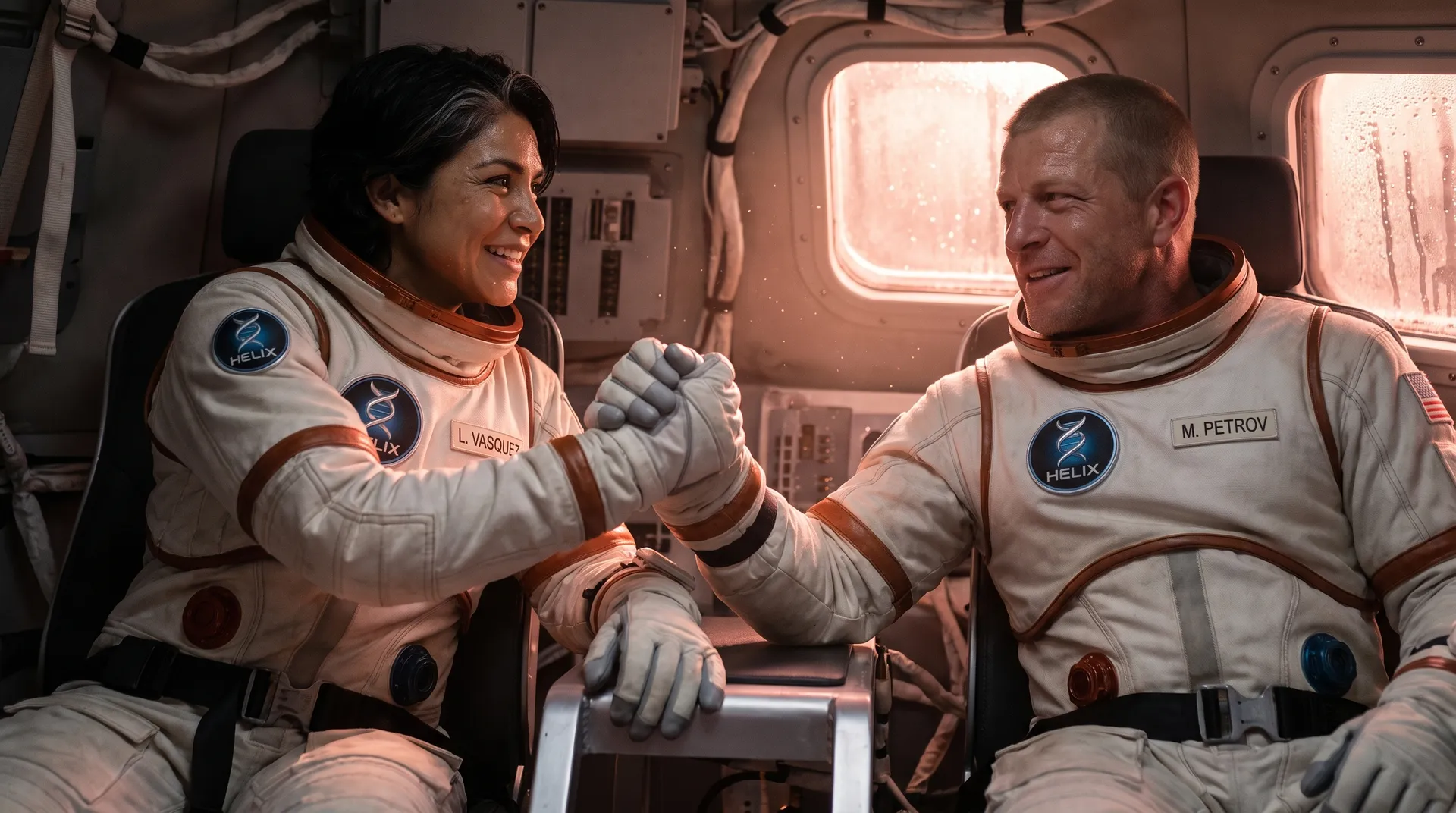
James laughs, one helpless bark of relief. Yuki opens her eyes and they are wet. Lena reaches across the aisle and grips Mikhail's hand, and they take their helmets off at last. Through the window red ground, and dust still drifting down in the stillness. On the panel by the hatch a status light blinks green.