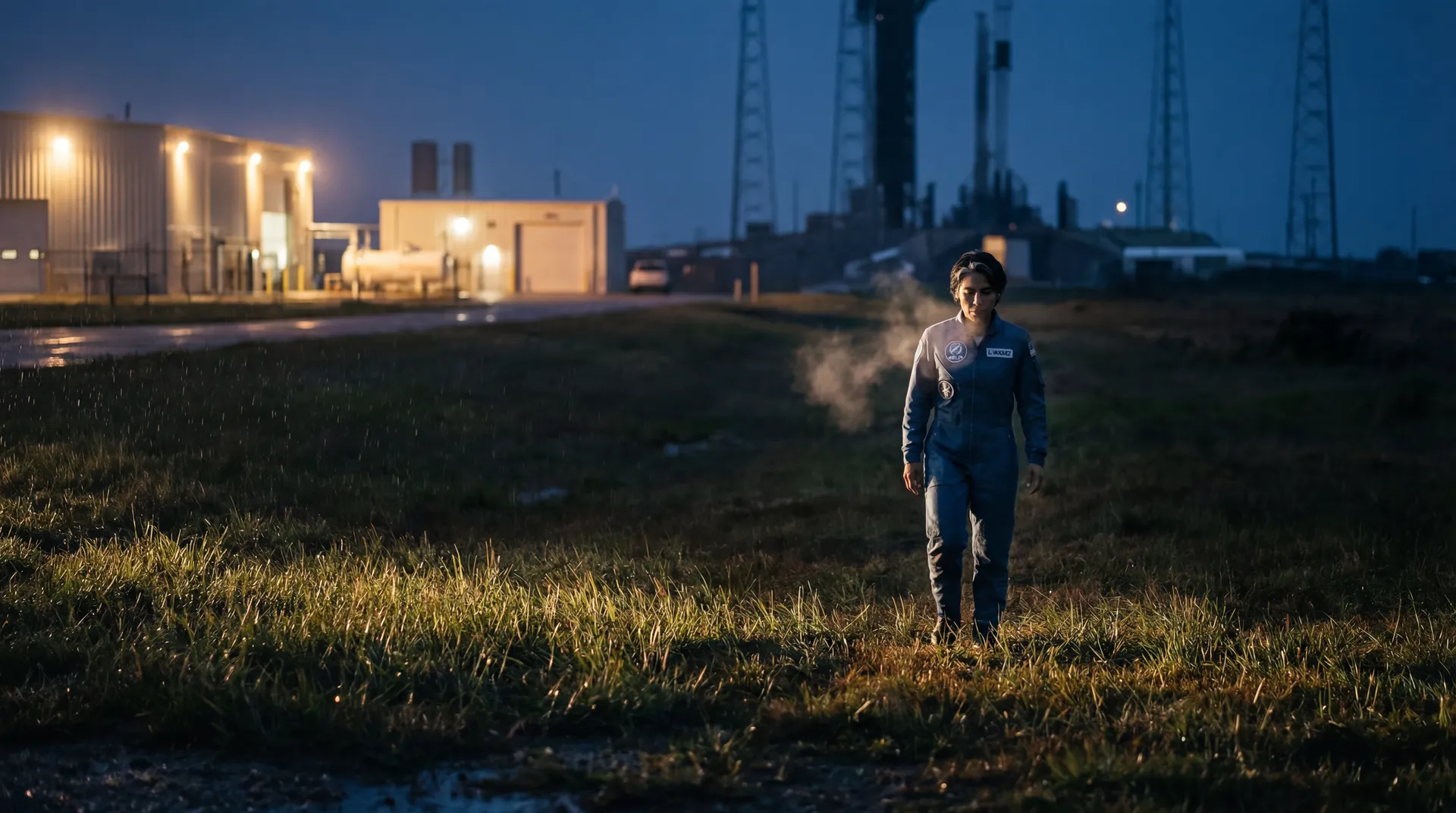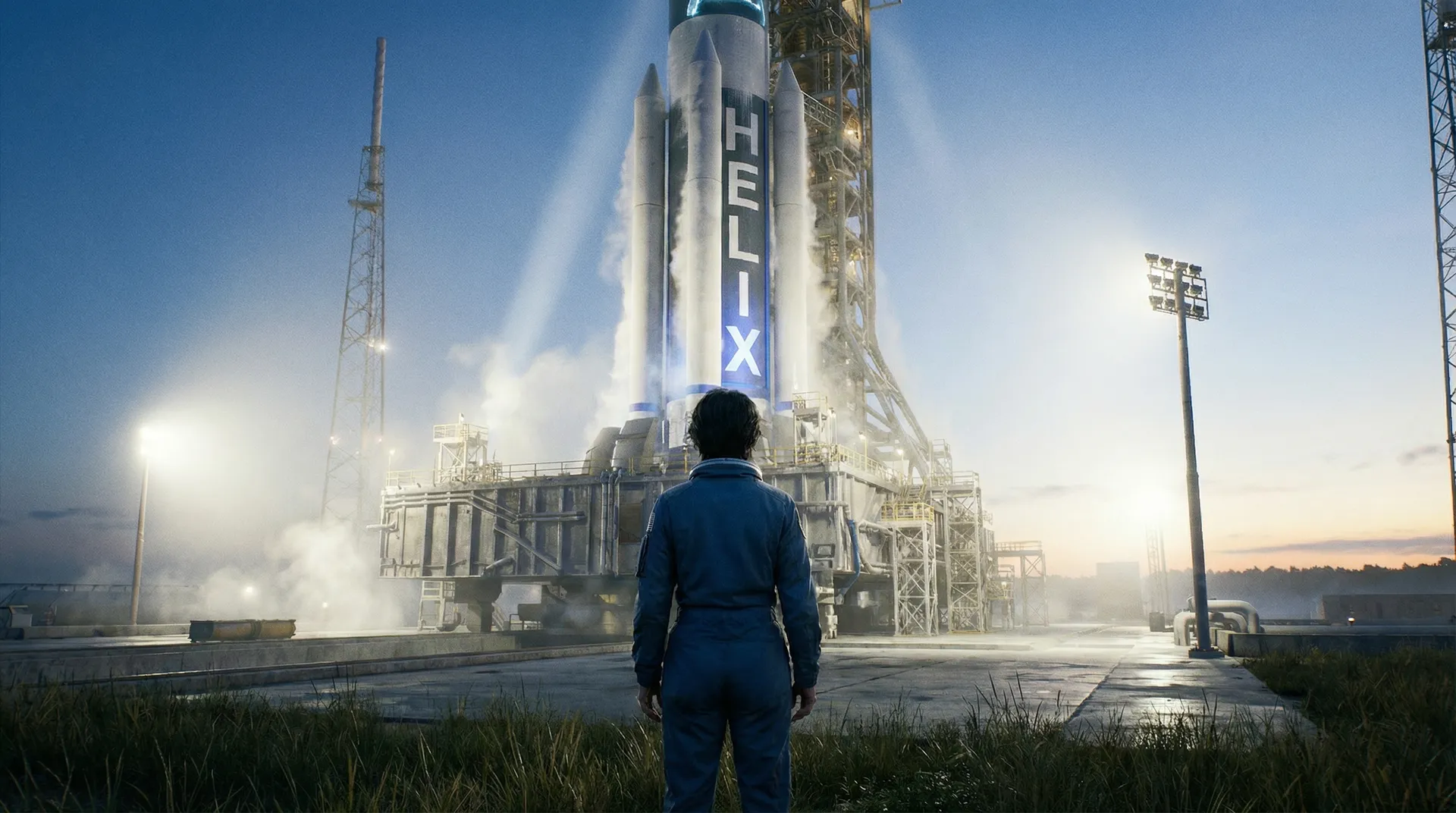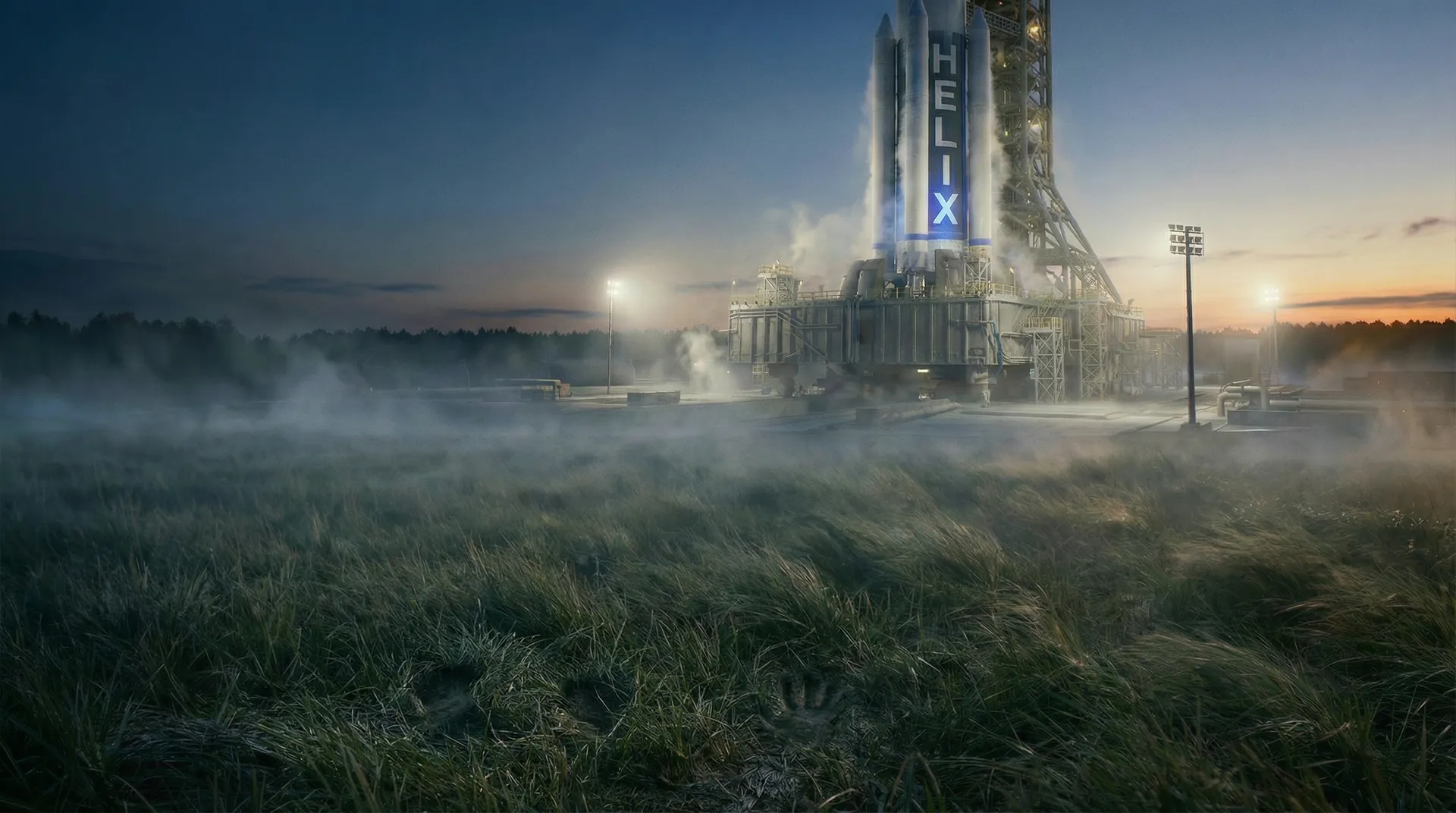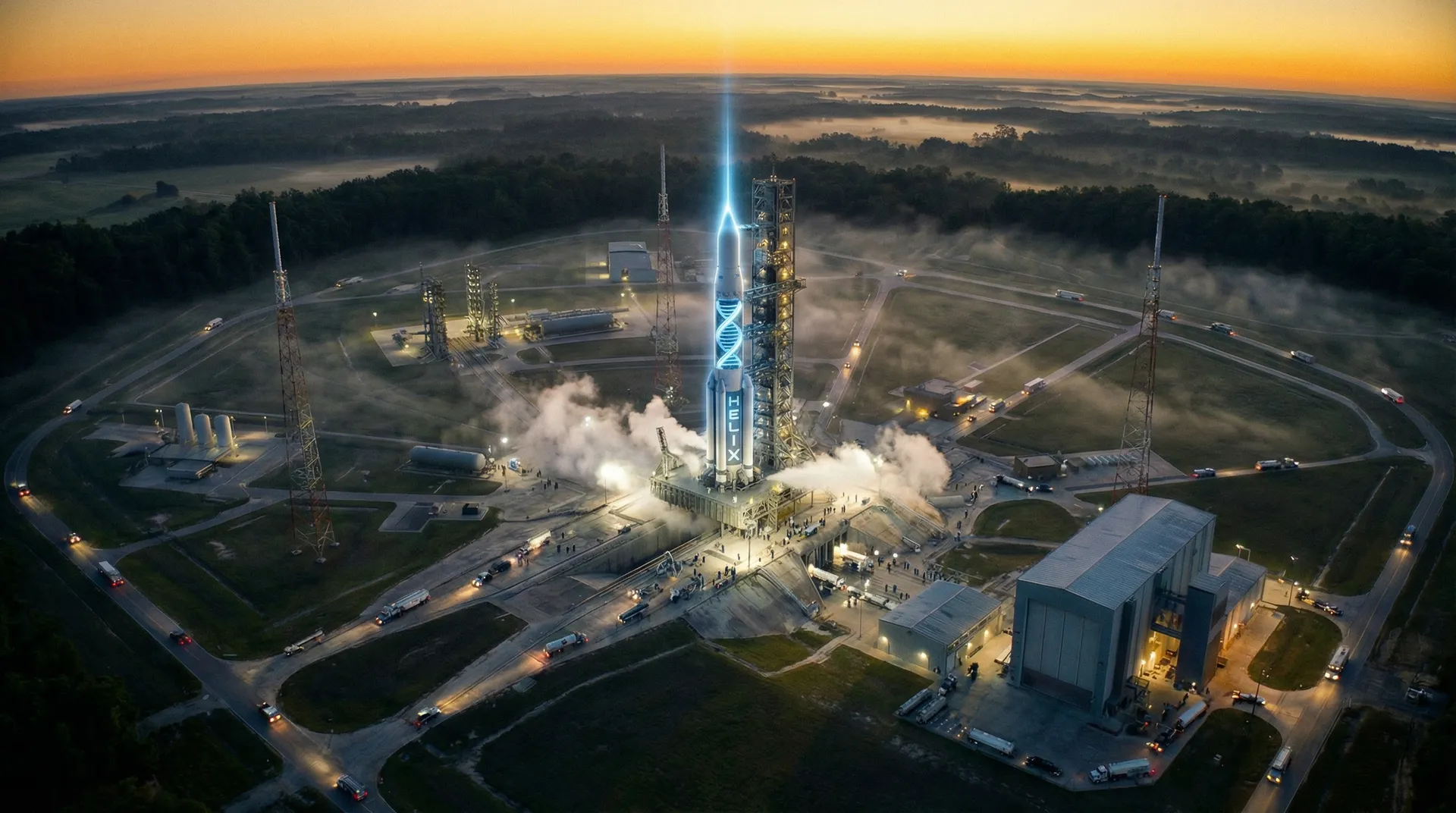
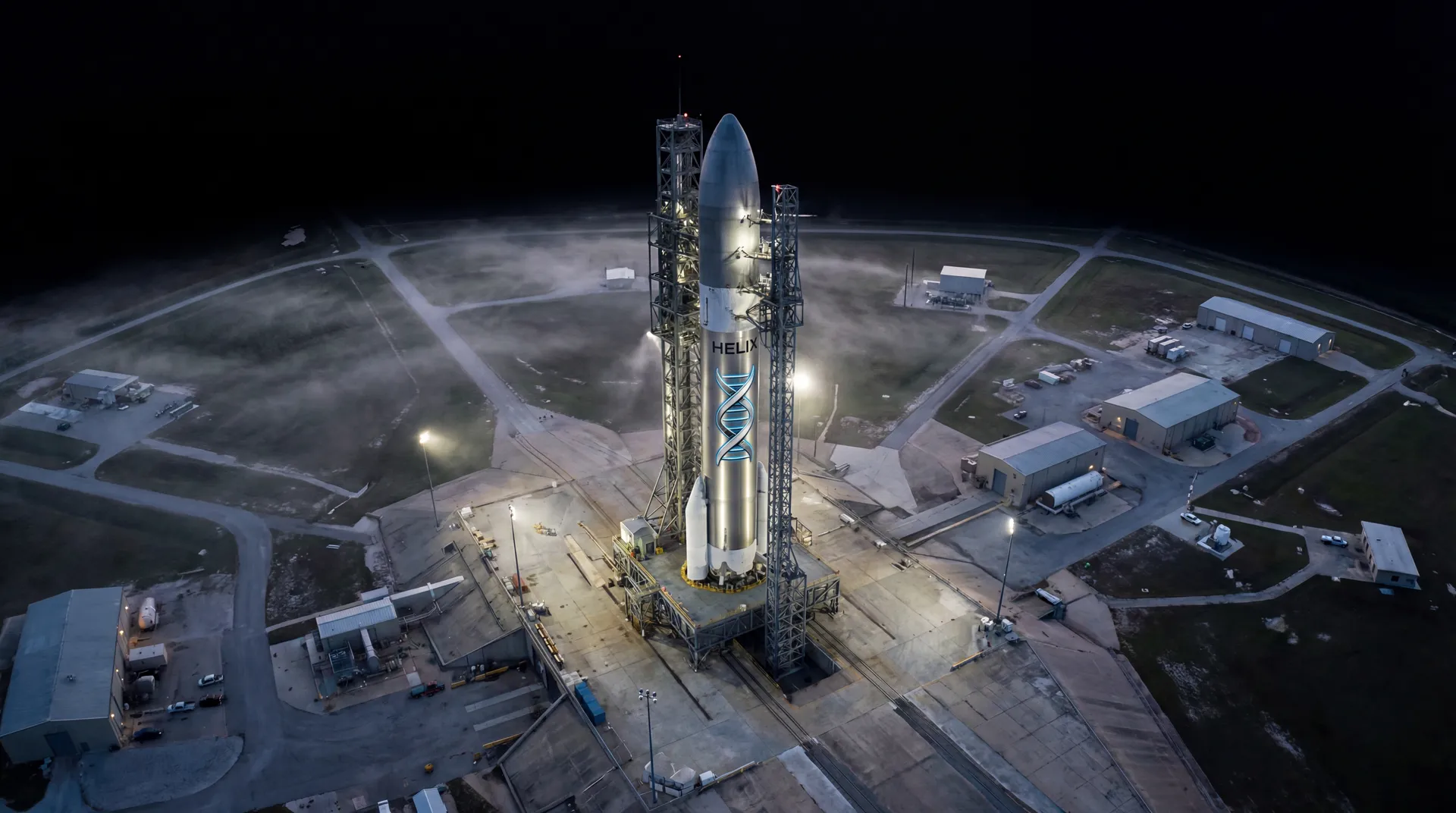
Pre-dawn. From high above, the HELIX launch facility is a small island of white light in a dark landscape, and at its centre stands the rocket, floodlit, steaming faintly in the cold.
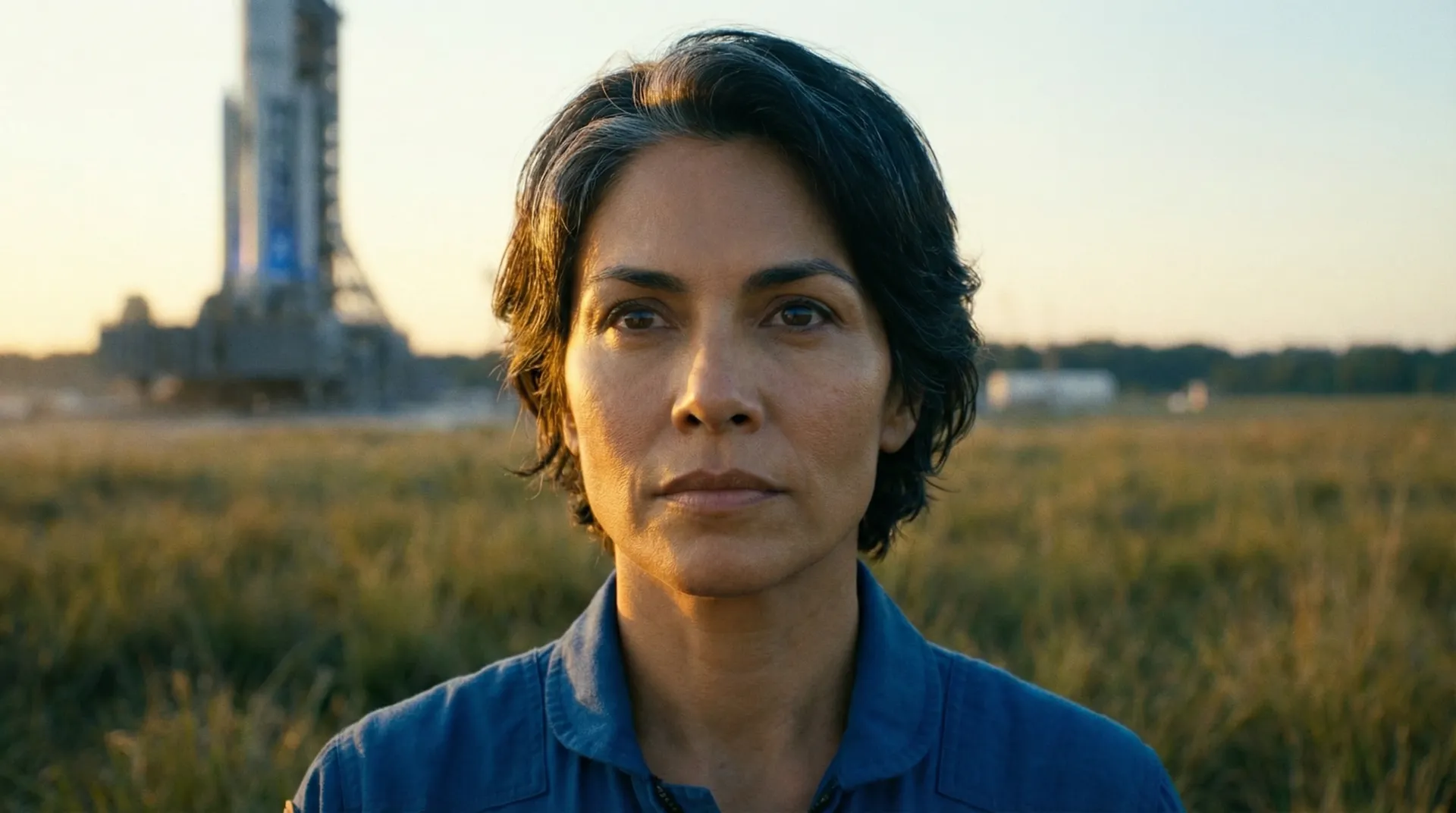
At the edge of the launch perimeter the wet grass catches the glow. A single figure walks through it, small against the scale of everything else: Commander Lena Vasquez, in her mission suit, alone. Her boots move slowly through the grass. Each step bends the blades, and the dew glimmers for a moment in the distant floodlight before the dark closes over it again.
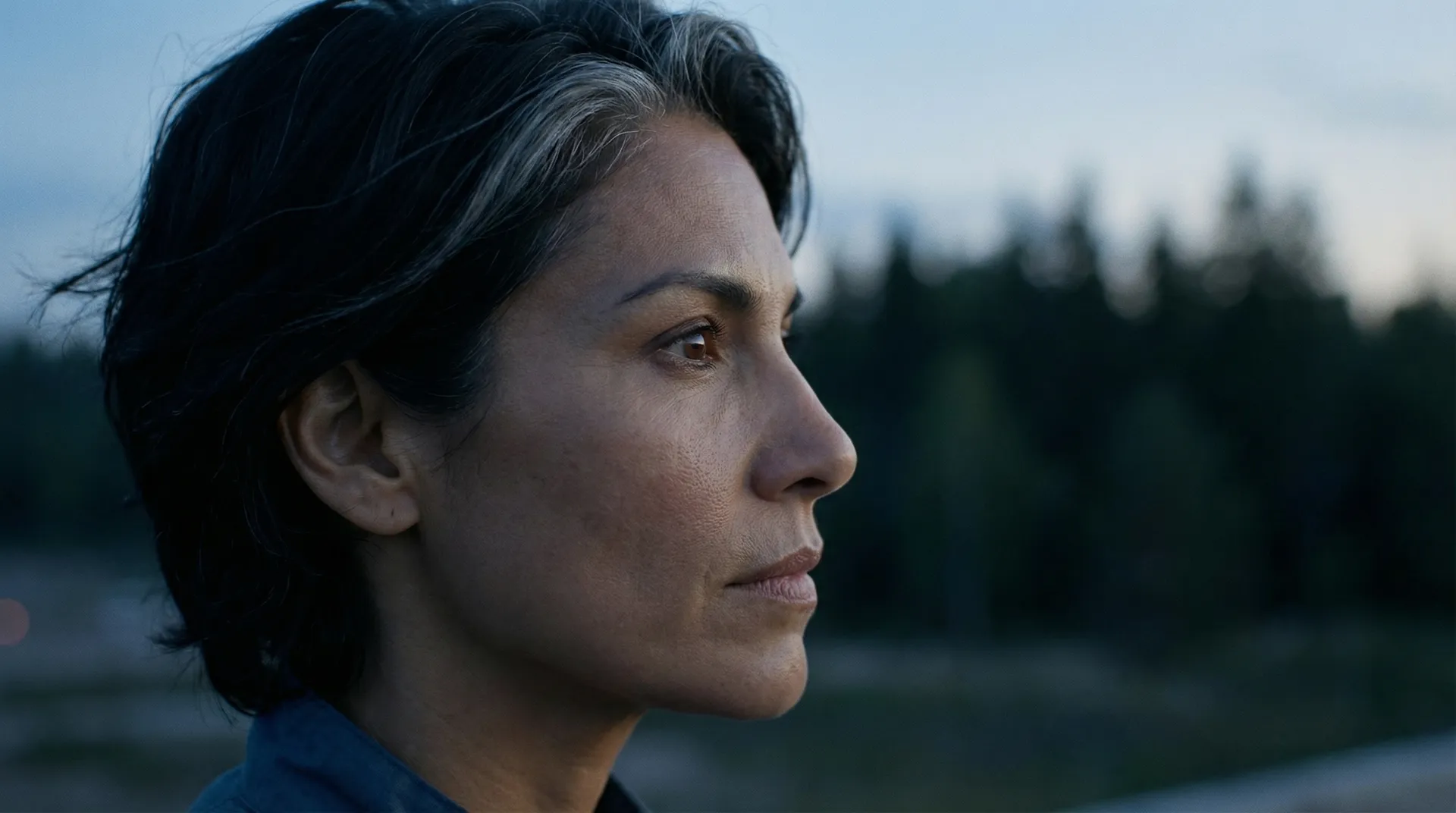
She stops at the perimeter and stands with her back to the rocket, looking outward. A dark treeline marks the edge of the facility. Wind moves through the leaves, and morning mist rises off the ground in slow curls. In profile, in the soft blue light before sunrise, her eyes are open and still. She is not looking at anything in particular. She is looking at Earth.
Behind her the rocket towers against the deep blue sky. It will be there in an hour whether she looks at it or not.
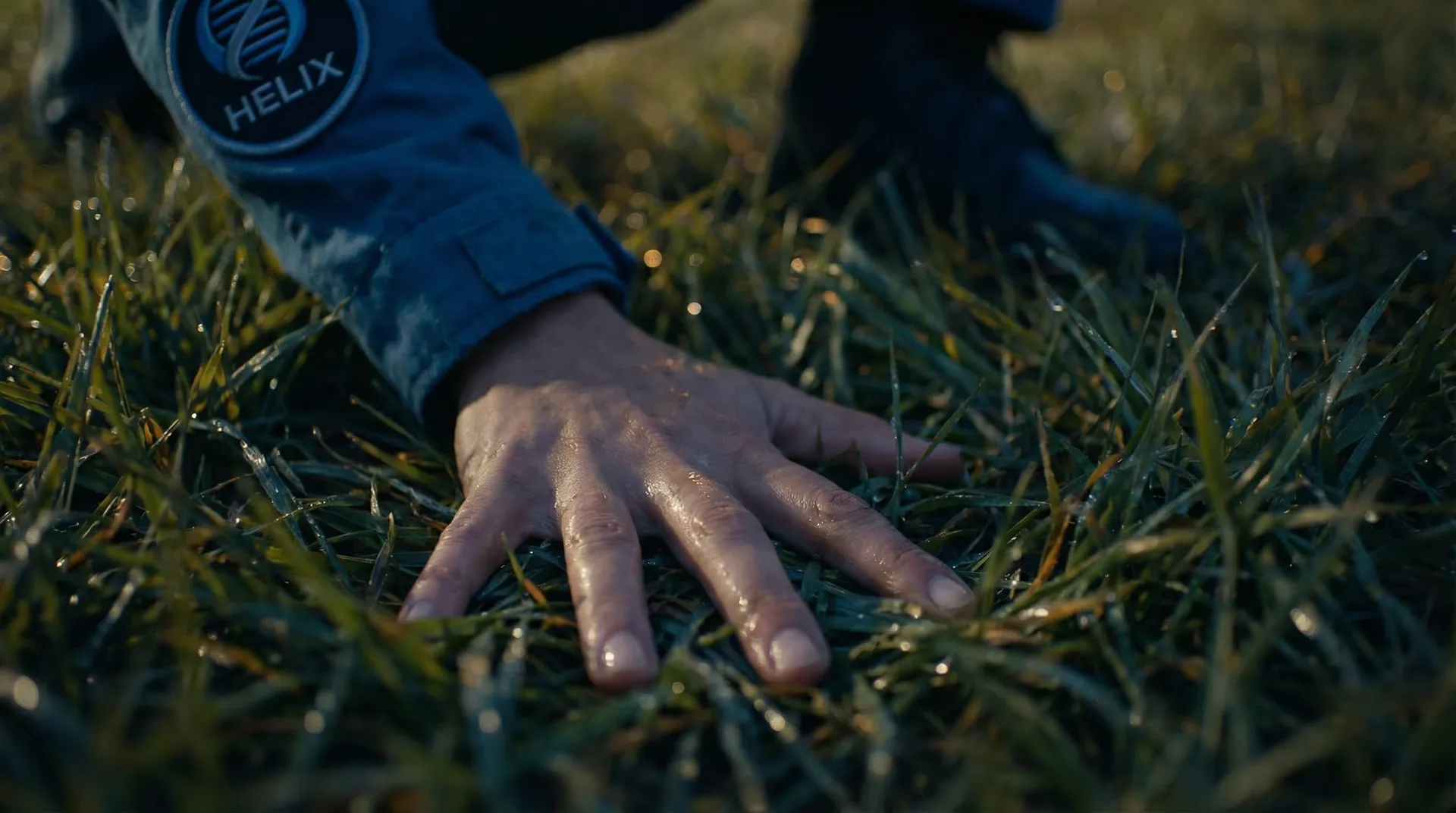
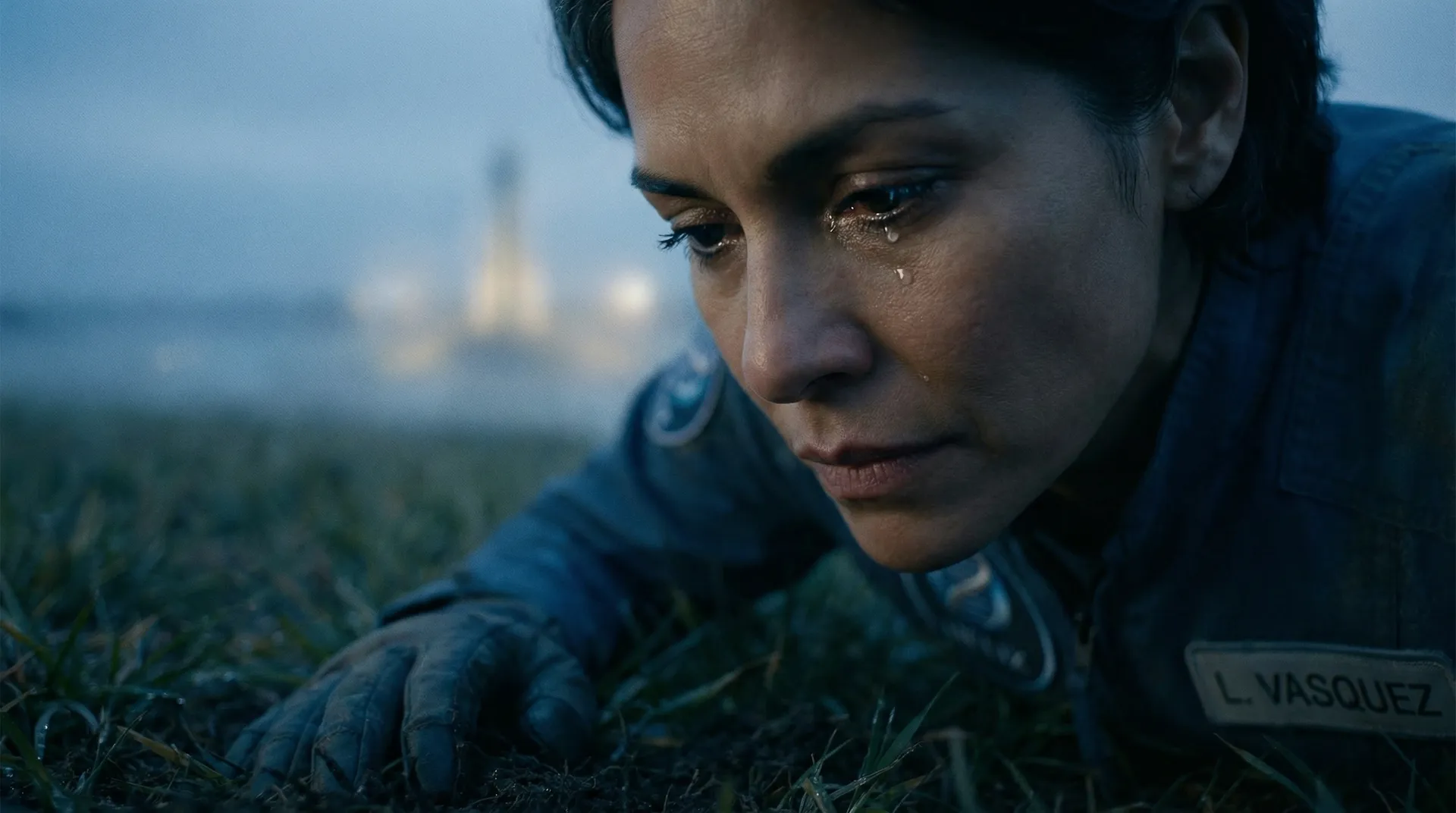
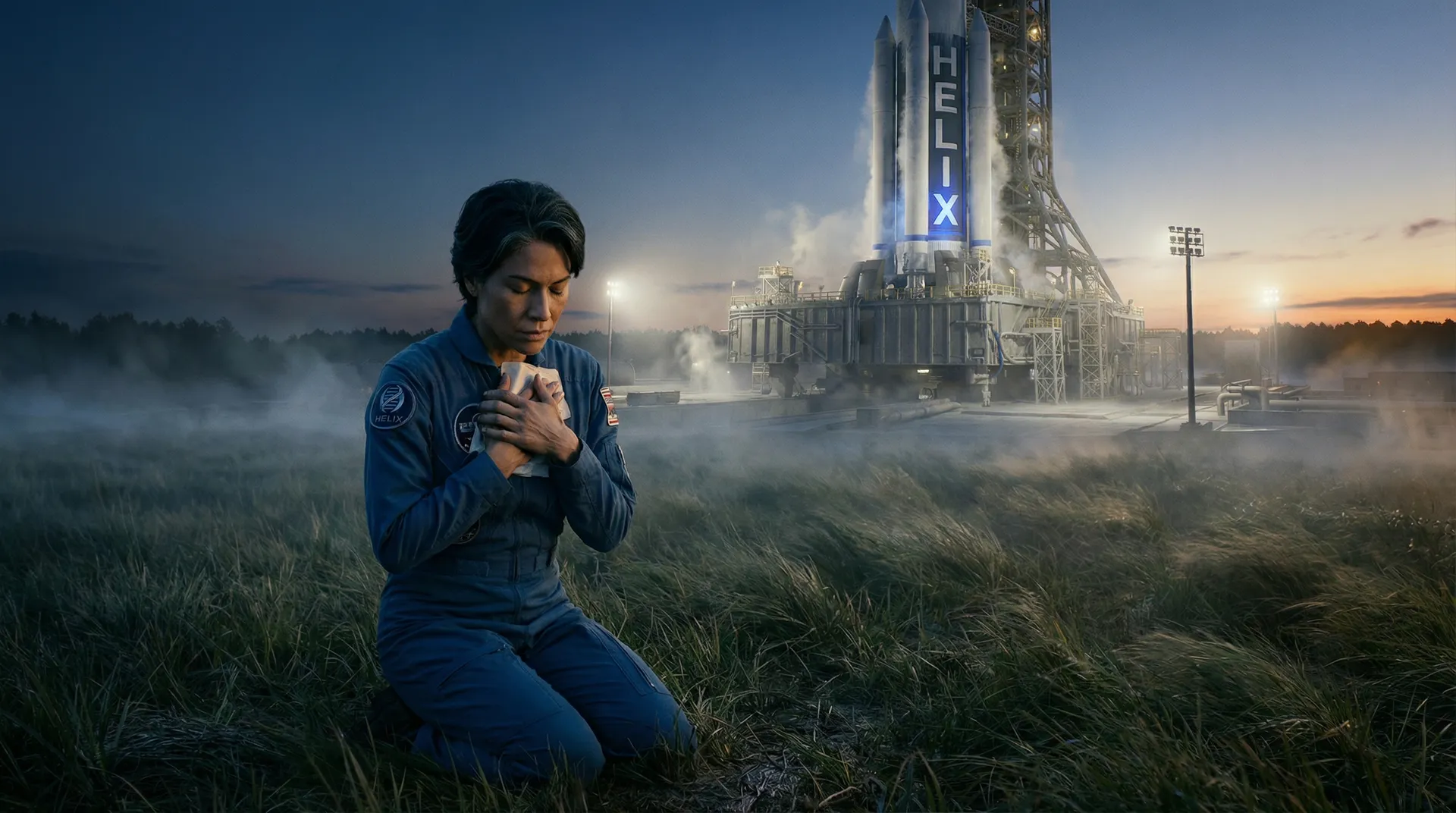
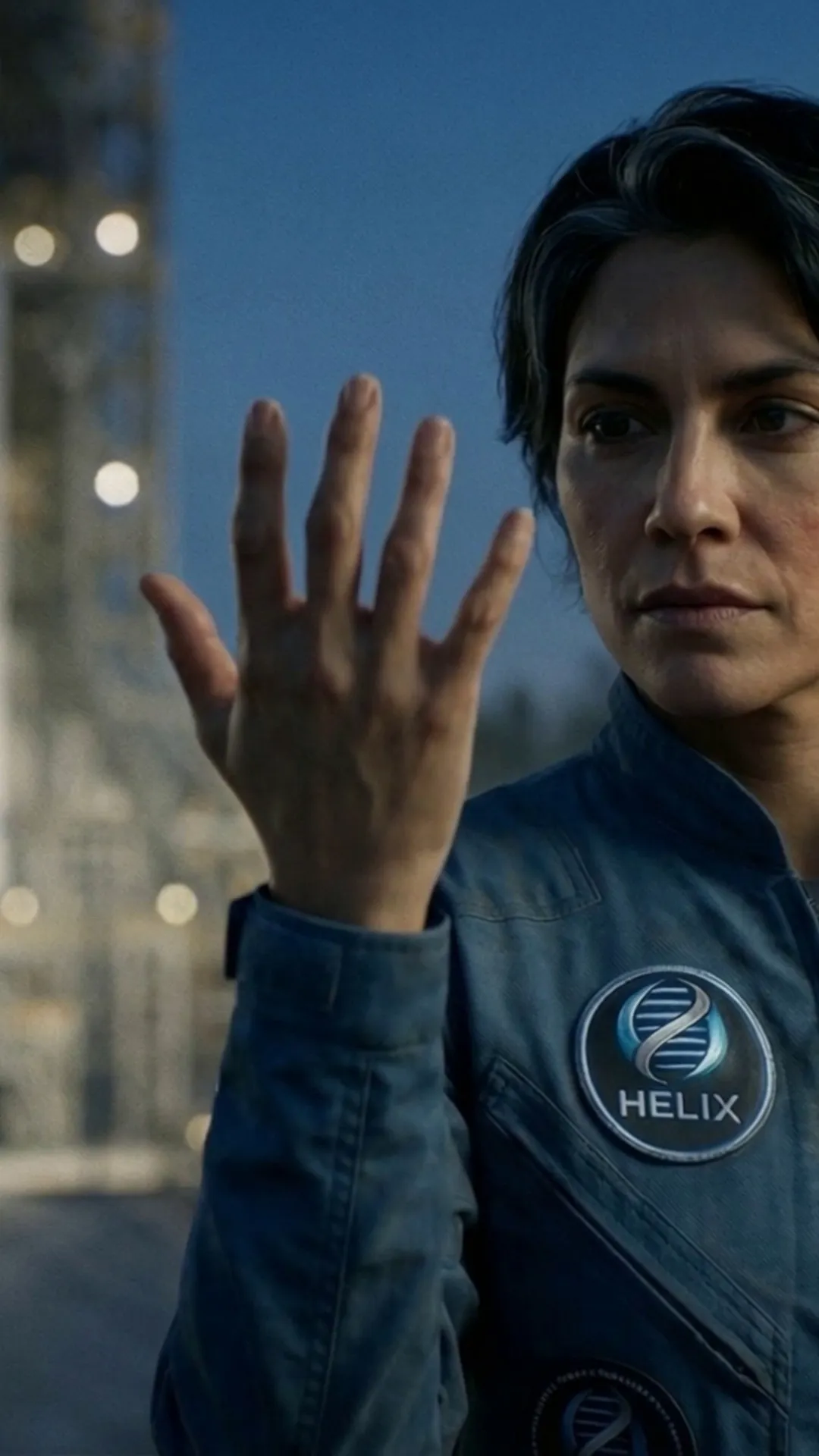
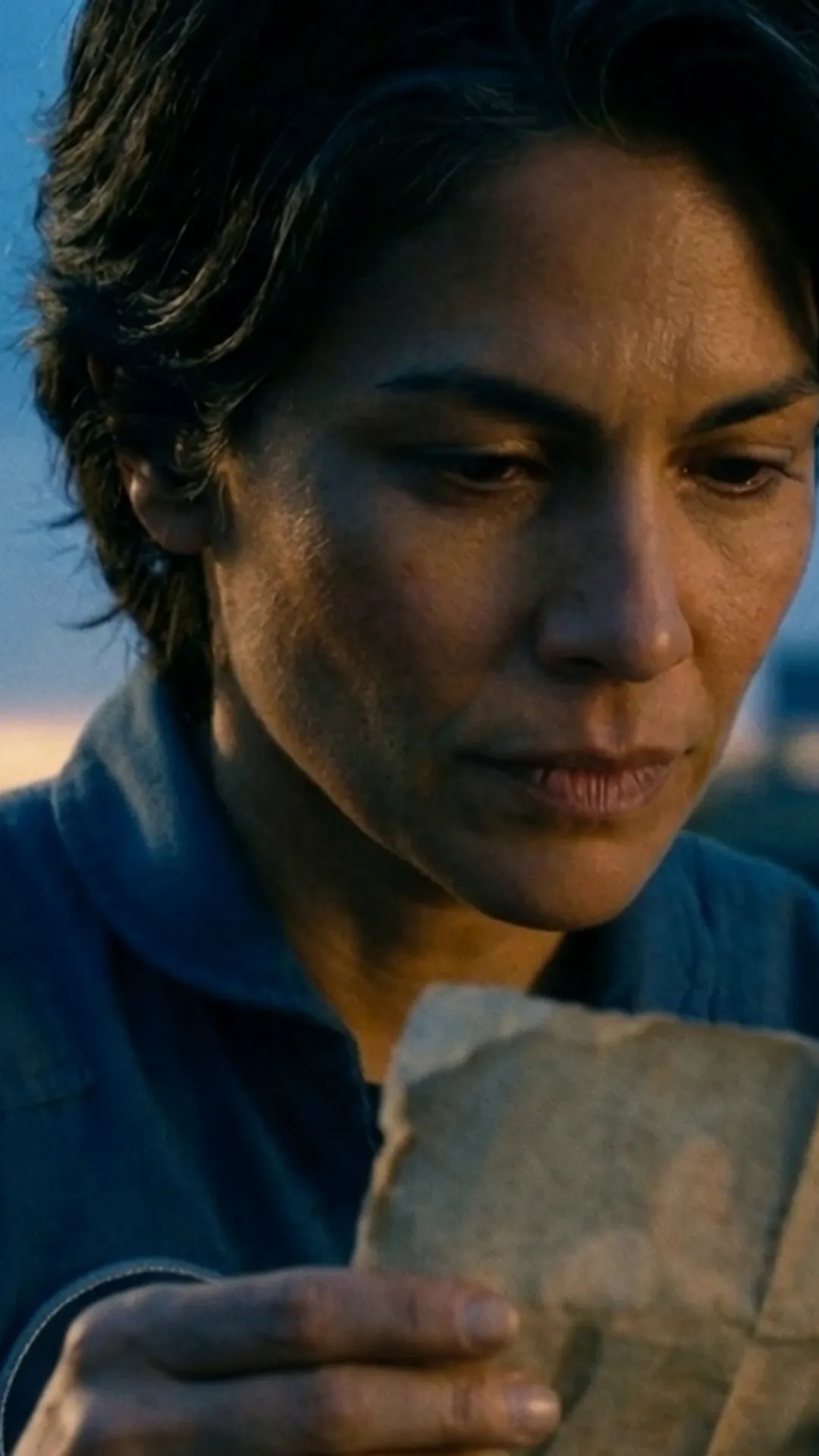
Lena raises her right hand and studies her open palm, bare, ungloved, as if memorising it. Then her hand descends toward the grass, fingers spreading wide, and her palm presses flat and firm against the damp earth. She kneels, both knees down, head slightly bowed, one hand on the ground. From above she is a single kneeling figure in a field of wet grass with a rocket blazing in the distance. The music, which until now has been a solo cello, lets the strings in.
Her eyes are wet. Not crying, but close. A single tear forms at the corner of one eye and falls.
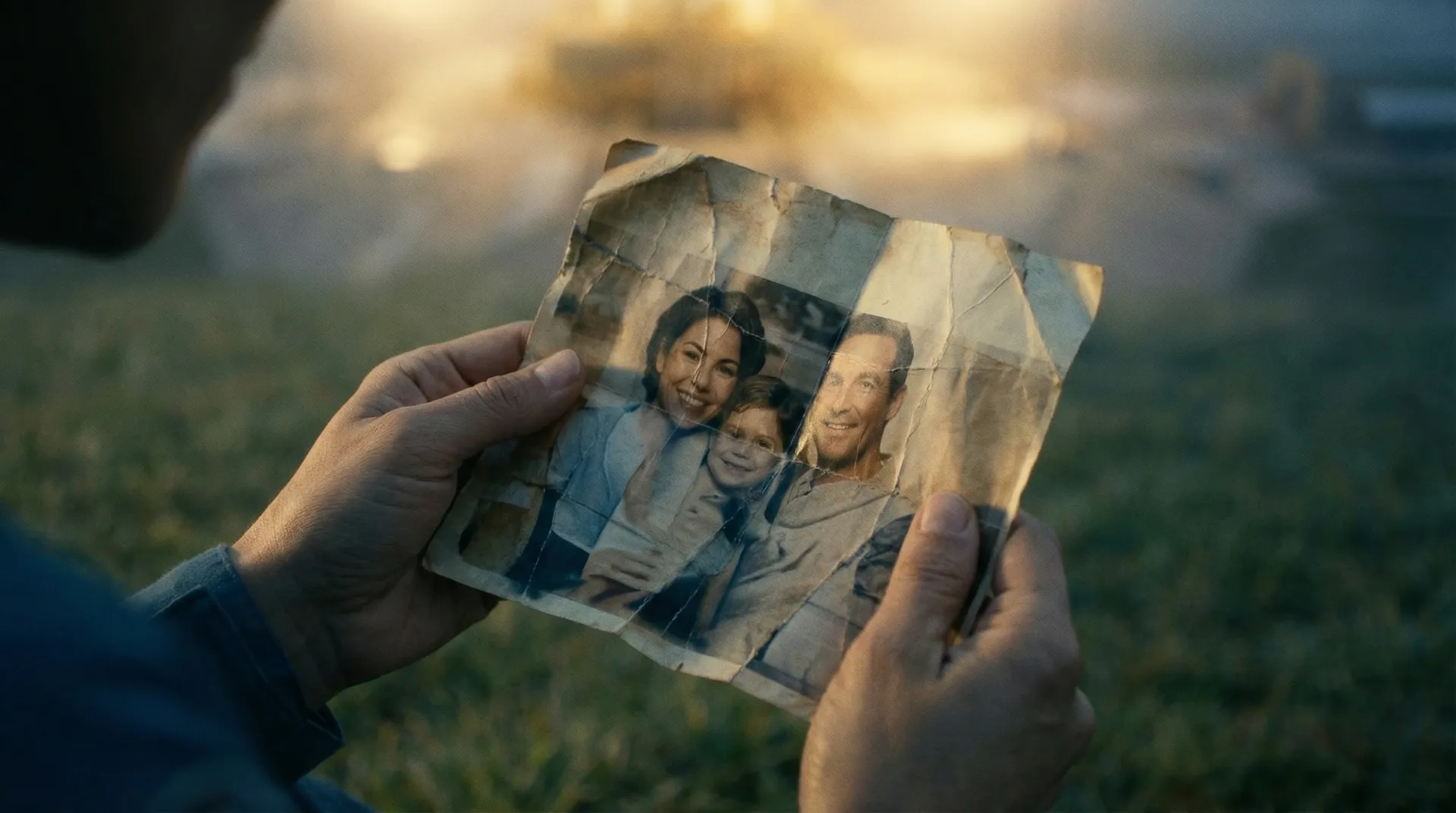
With her free hand she reaches into an inner pocket of her suit and draws out a photograph, worn and folded, its edges soft from being opened and closed many times. A family portrait, slightly faded, the faces warm. Her expression breaks, just for a moment: grief, and love, and underneath both a fierce determination that was there before either of them.
She stays kneeling with the photograph pressed to her chest and her eyes closed, and around her the world is alive in the way it is only at this hour: mist curling, grass moving, birds beginning somewhere in the trees. She opens her eyes and looks straight ahead to the horizon, where the first ghost of gold light is showing.
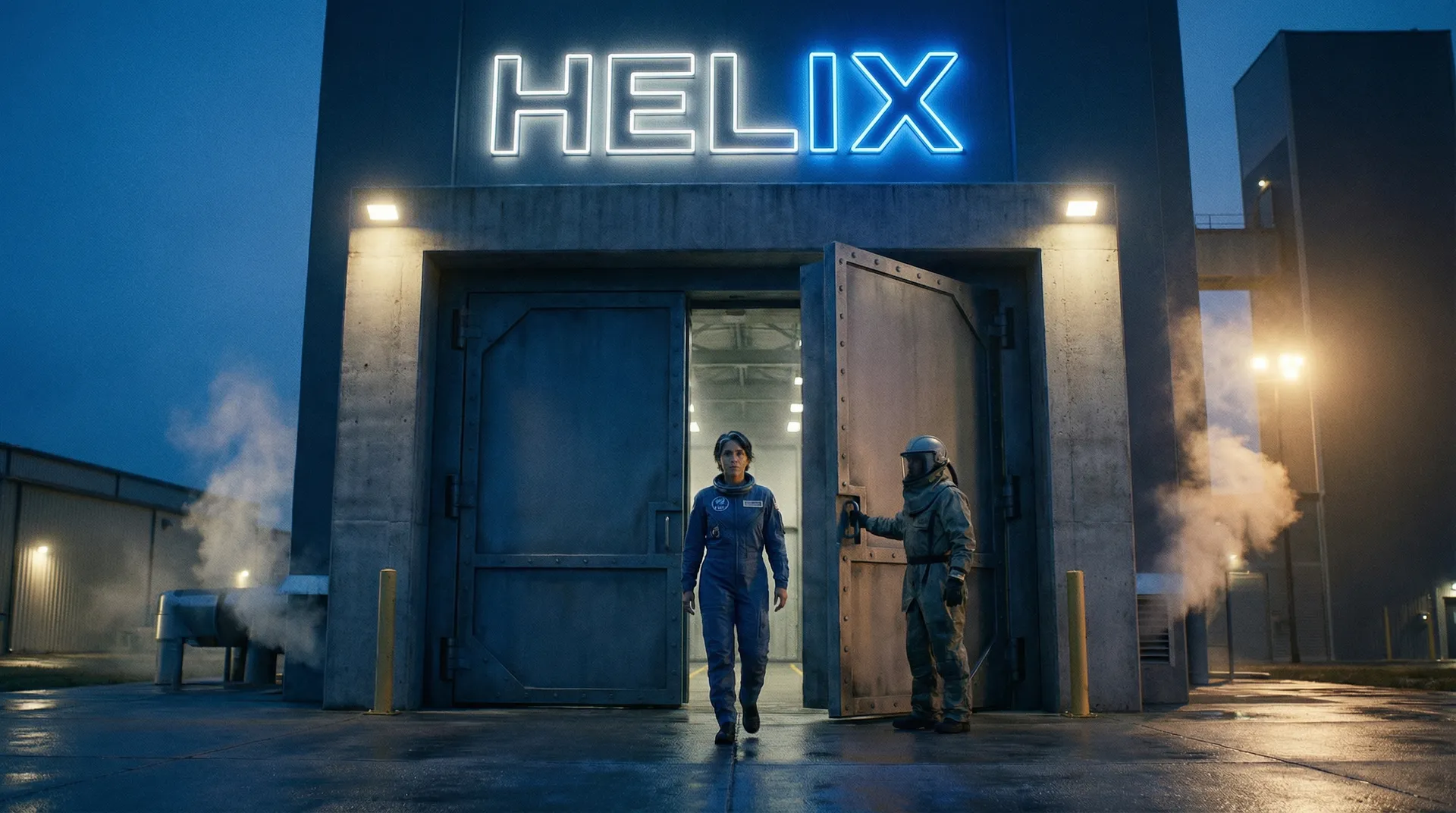
Then she rises. She tucks the photograph back into her pocket and stands fully upright, shoulders squaring, the rocket blazing behind her. She turns and walks back toward the facility, and this time each footstep is firm, the grass springing up behind her. The HELIX doors are large and reinforced, the double helix glowing silver and electric blue above them. She walks through, and they close.
The launch facility, empty. The wet grass where she knelt is undisturbed except for two knee impressions and a handprint, already filling with dew.
The camera begins to rise. From the base of the rocket it pulls back and up, slowly, revealing the full scale of the vehicle, then the pad, then the whole launch complex laid out in light against the dark. It keeps rising. The complex becomes a cluster of lights, then a point, and the curve of the planet comes into view at the edge of the frame. From near-orbital height the HELIX launch complex is a tiny constellation on a vast dark continent, and somewhere in it a woman is waiting for the sun.