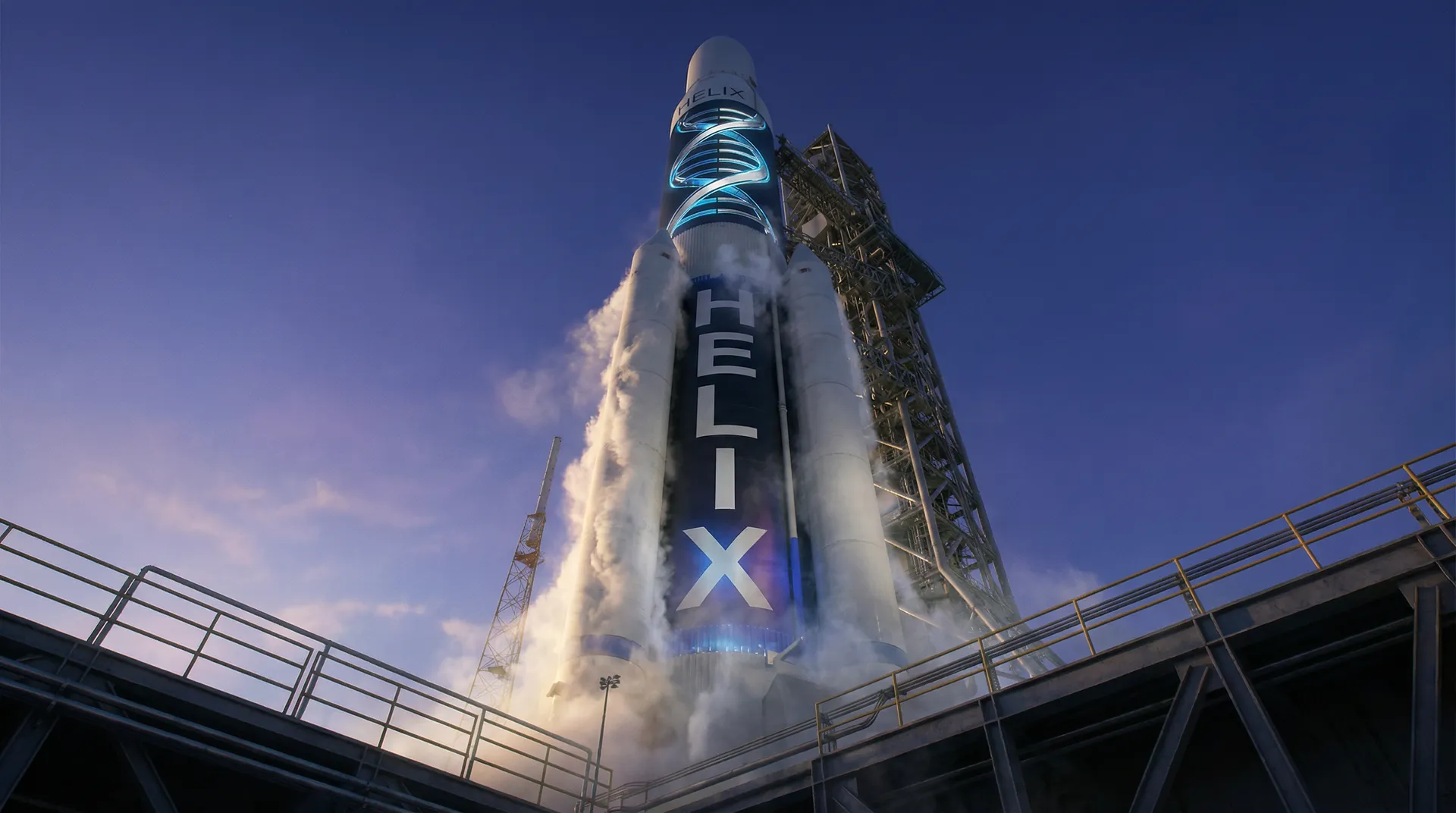
The track opens where the last one ended, on the same extreme high shot: the HELIX launch complex at pre-dawn, the rocket a brilliant white needle of light in the dark. Then the camera is on the ground, looking straight up from beneath the vehicle, and the music hits.
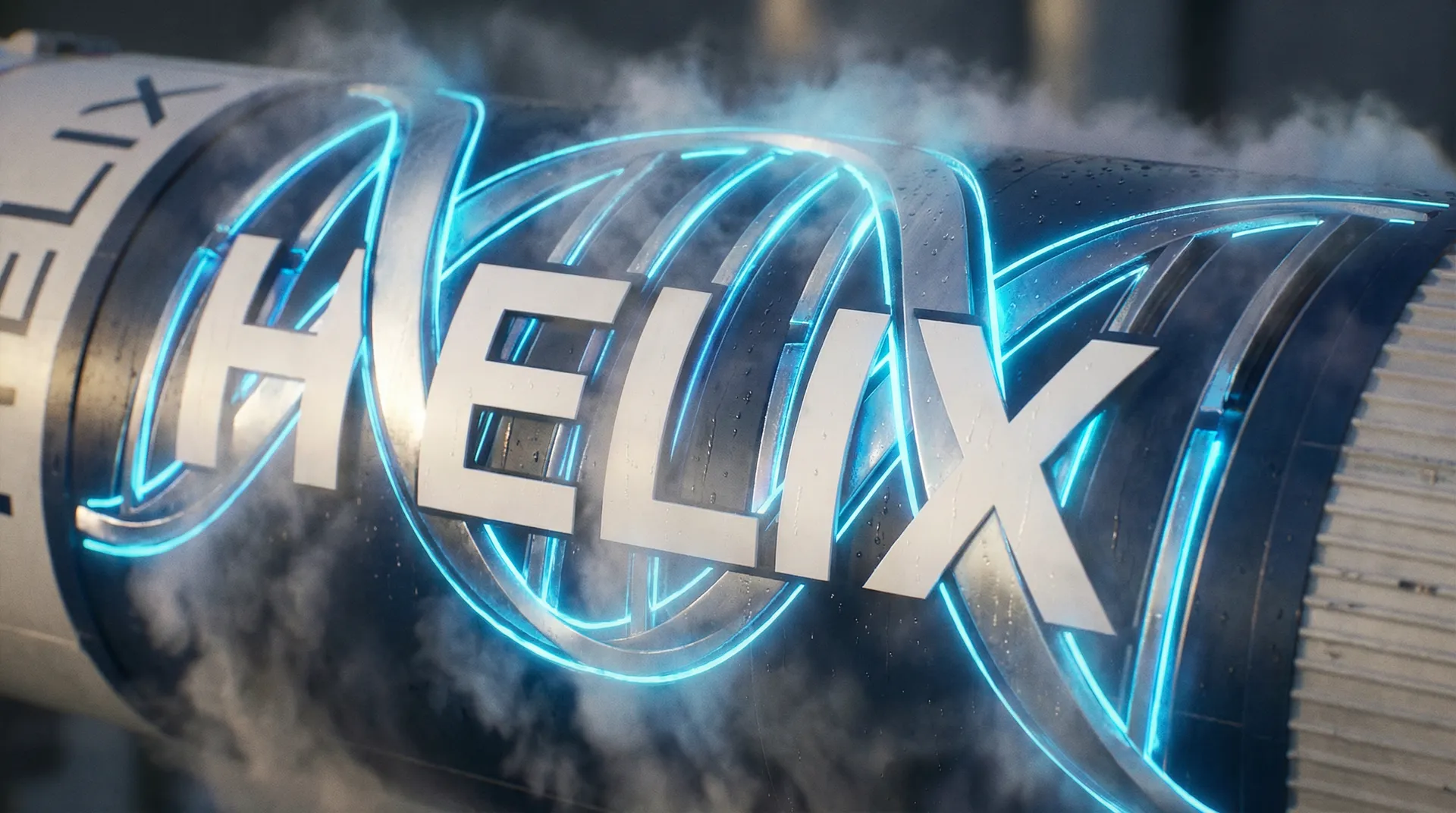
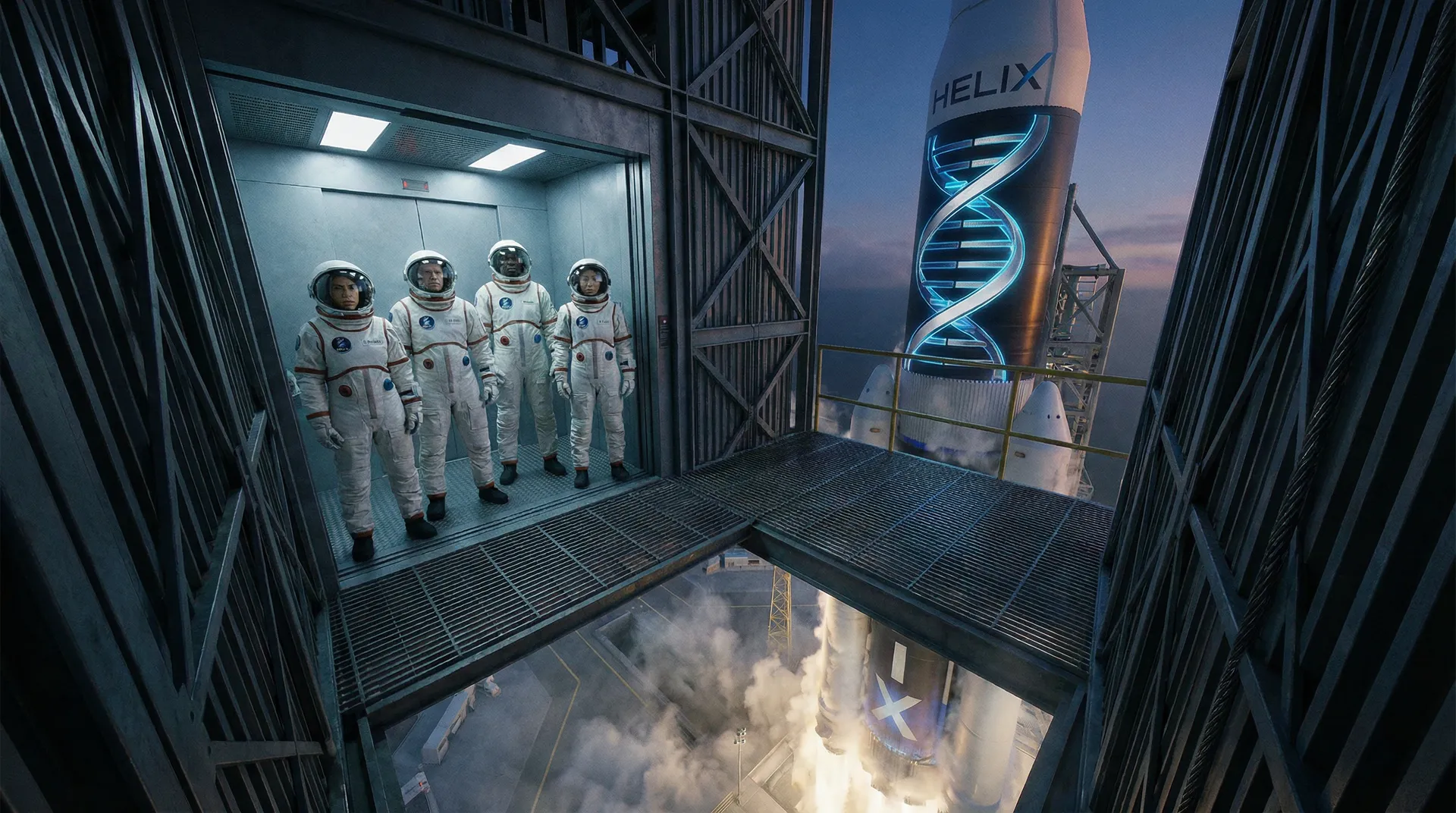
The rocket towers overhead, white, with HELIX lettered down its body and the double helix glowing silver and electric blue on the hull. Steam drifts from its base. Everything about it says it was built to leave.
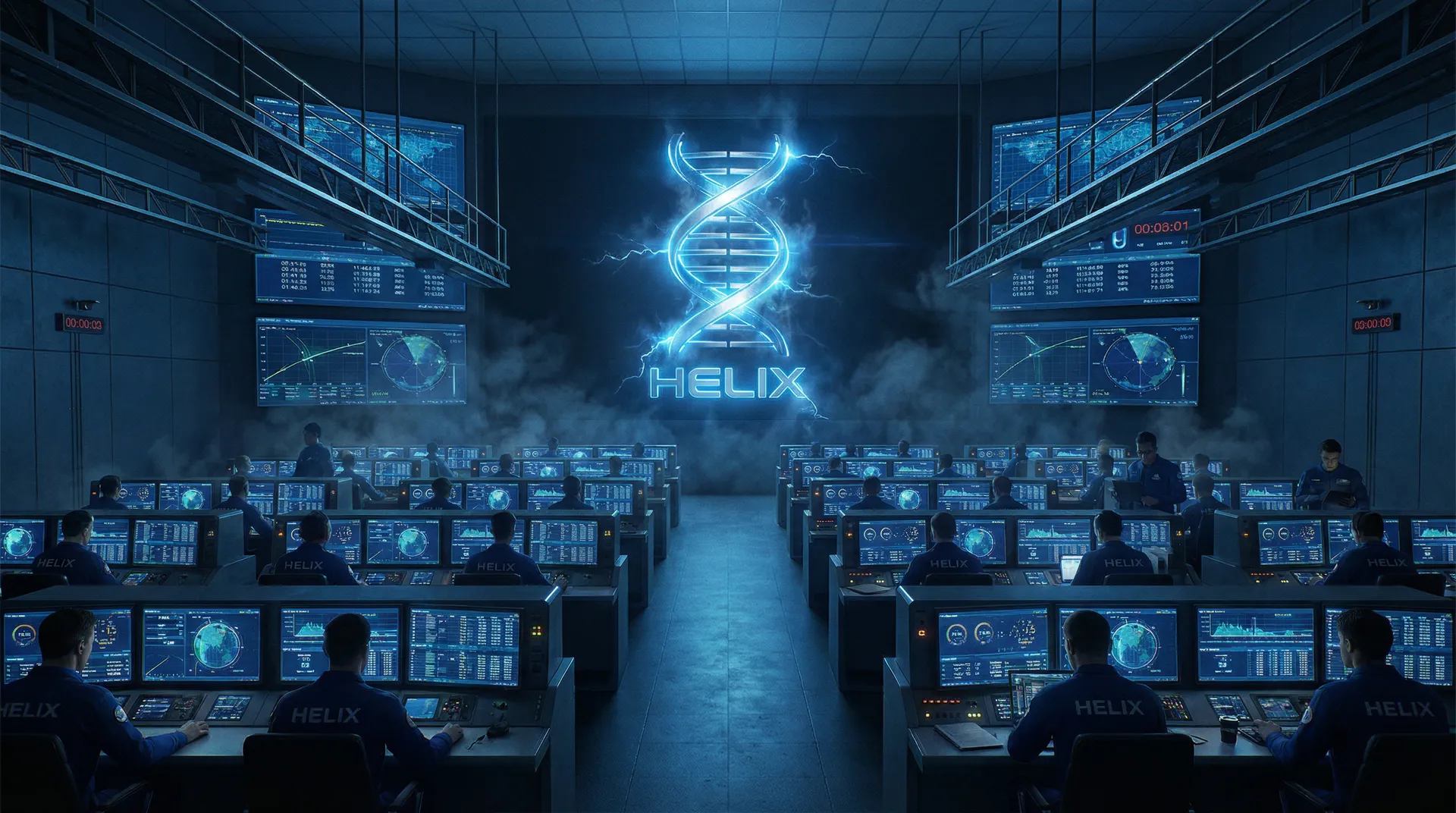
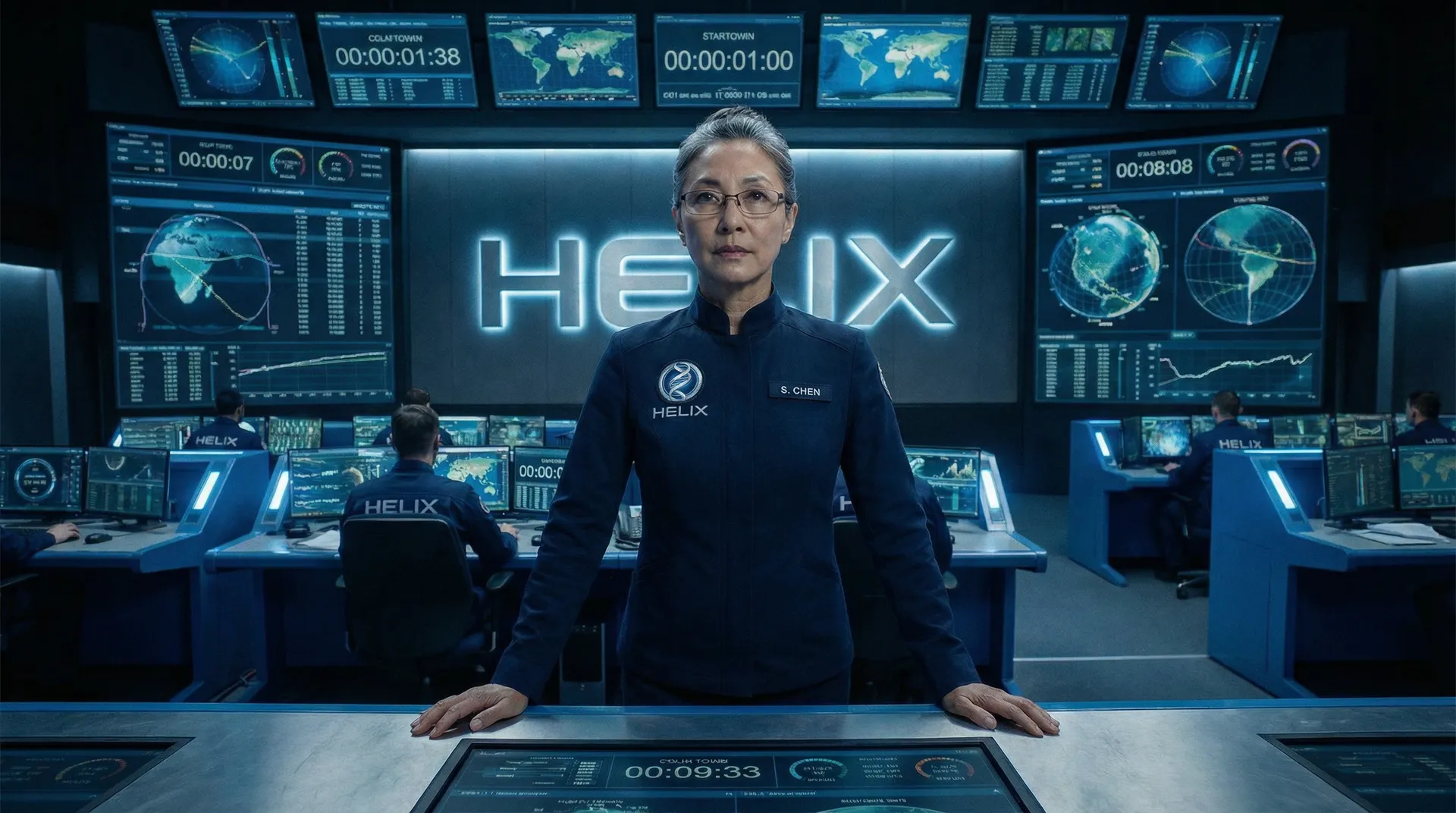
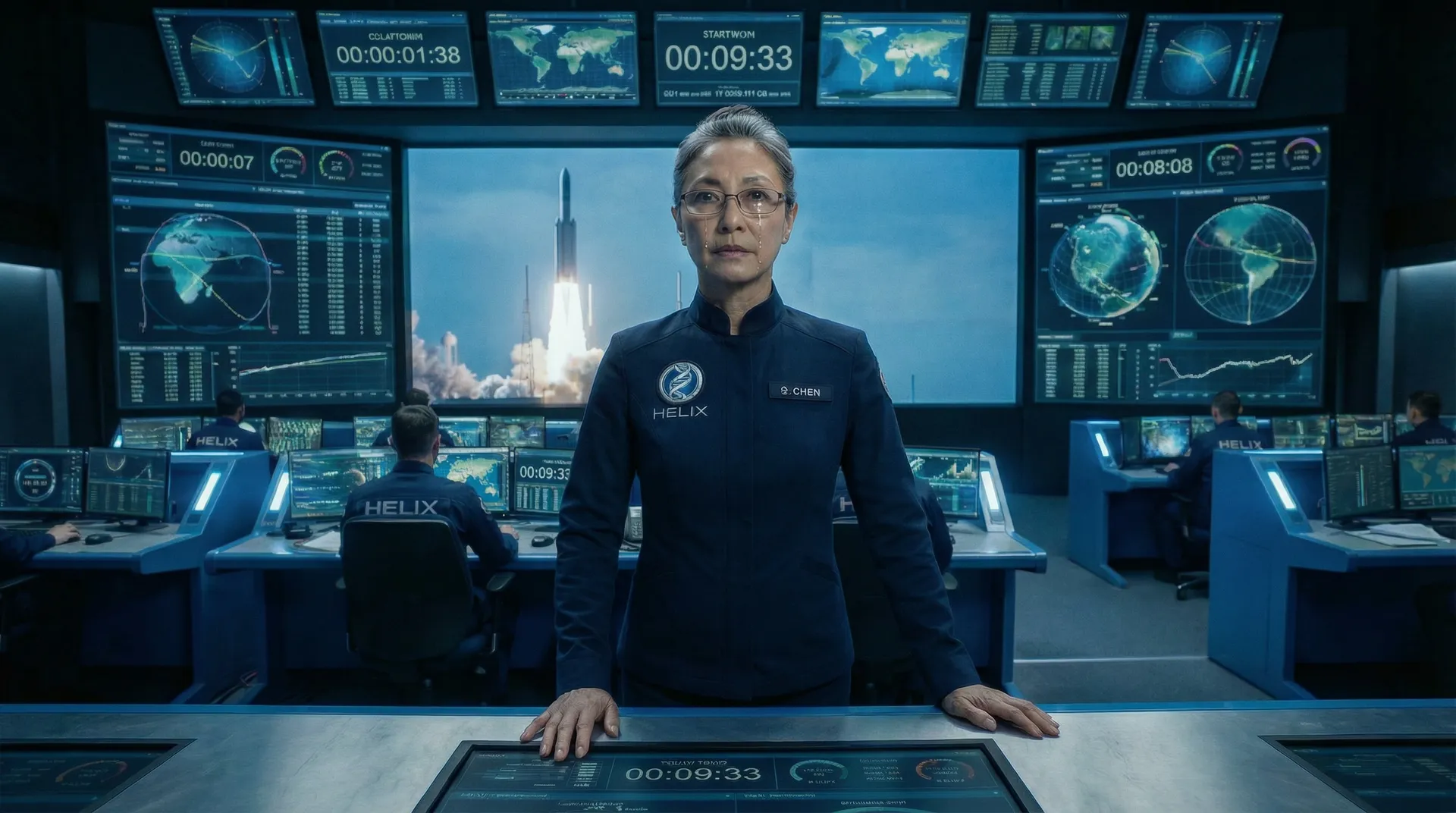
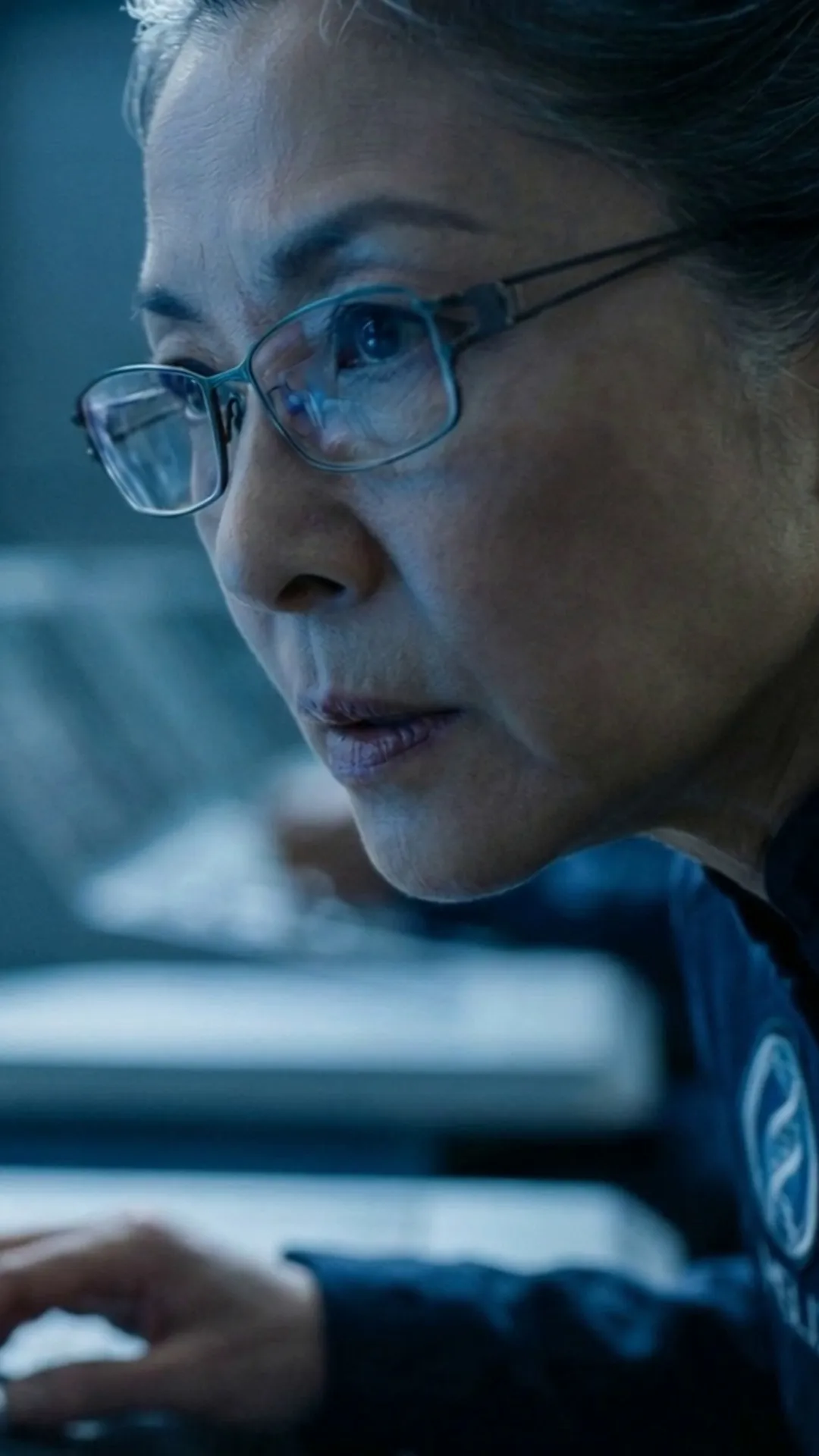
Inside HELIX Mission Control, a vast dark room is filled with blue telemetry screens and the lit HELIX logo on the far wall. Director Sarah Chen sits at her console, silver-streaked hair pulled back, reading glasses on, composed in the way of someone holding a great deal very still. Her hands rest on the console, one finger lying lightly on a communications switch.
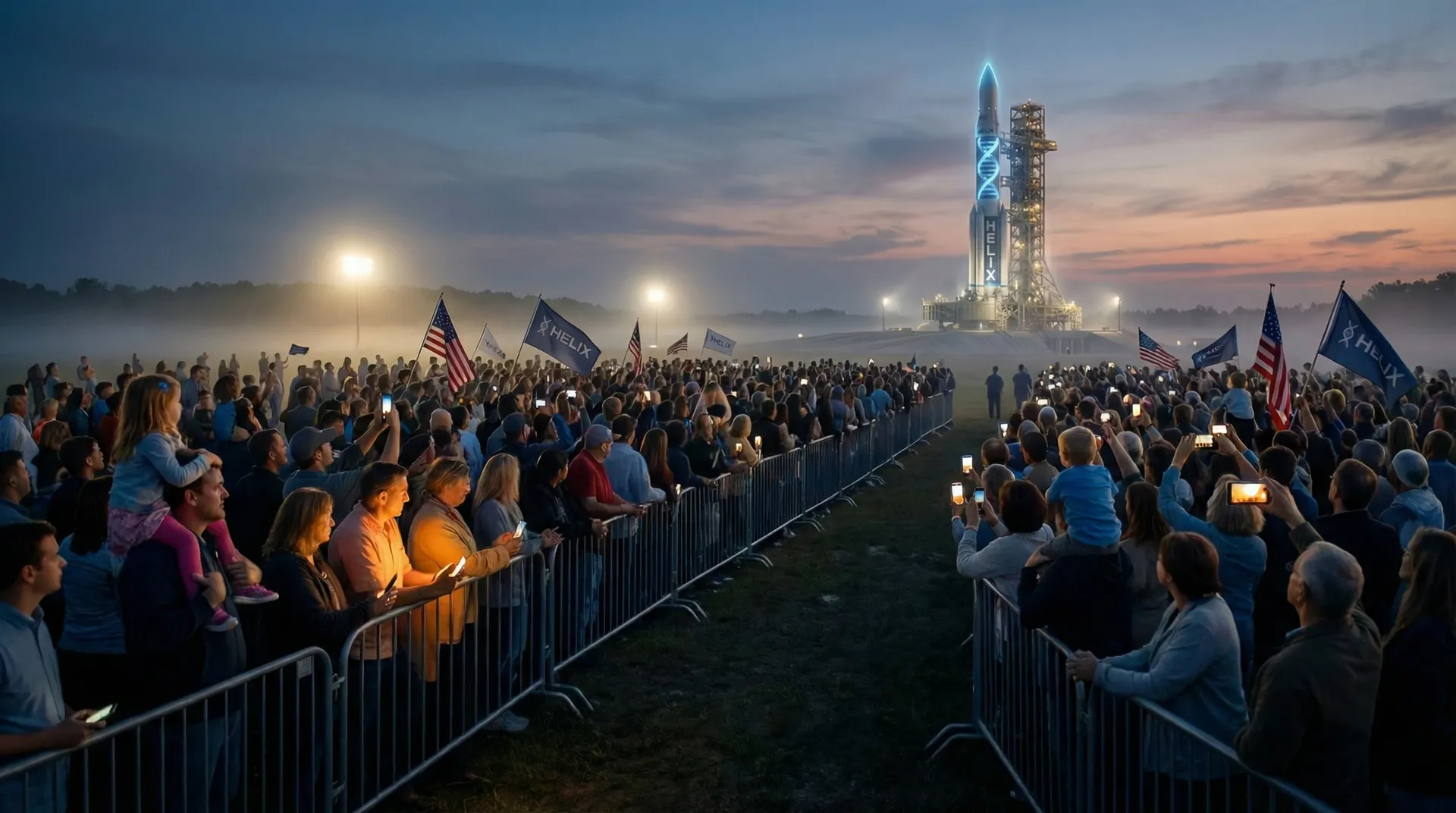
Outside the facility perimeter, hundreds of people have gathered behind metal barriers in the dark, their faces lit by the distant floodlights and by the glow of their phones. They have come to watch four people leave the planet.
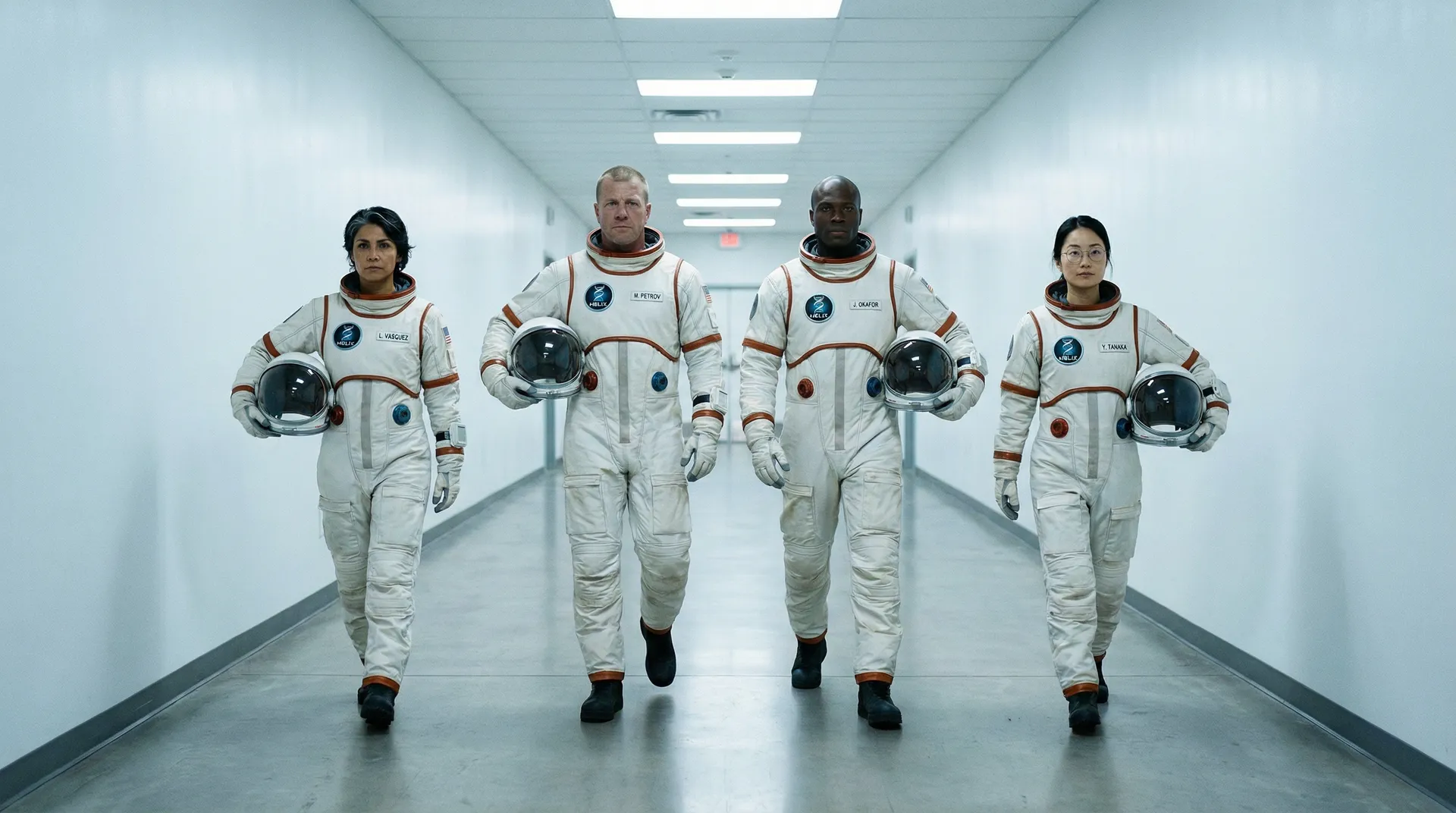
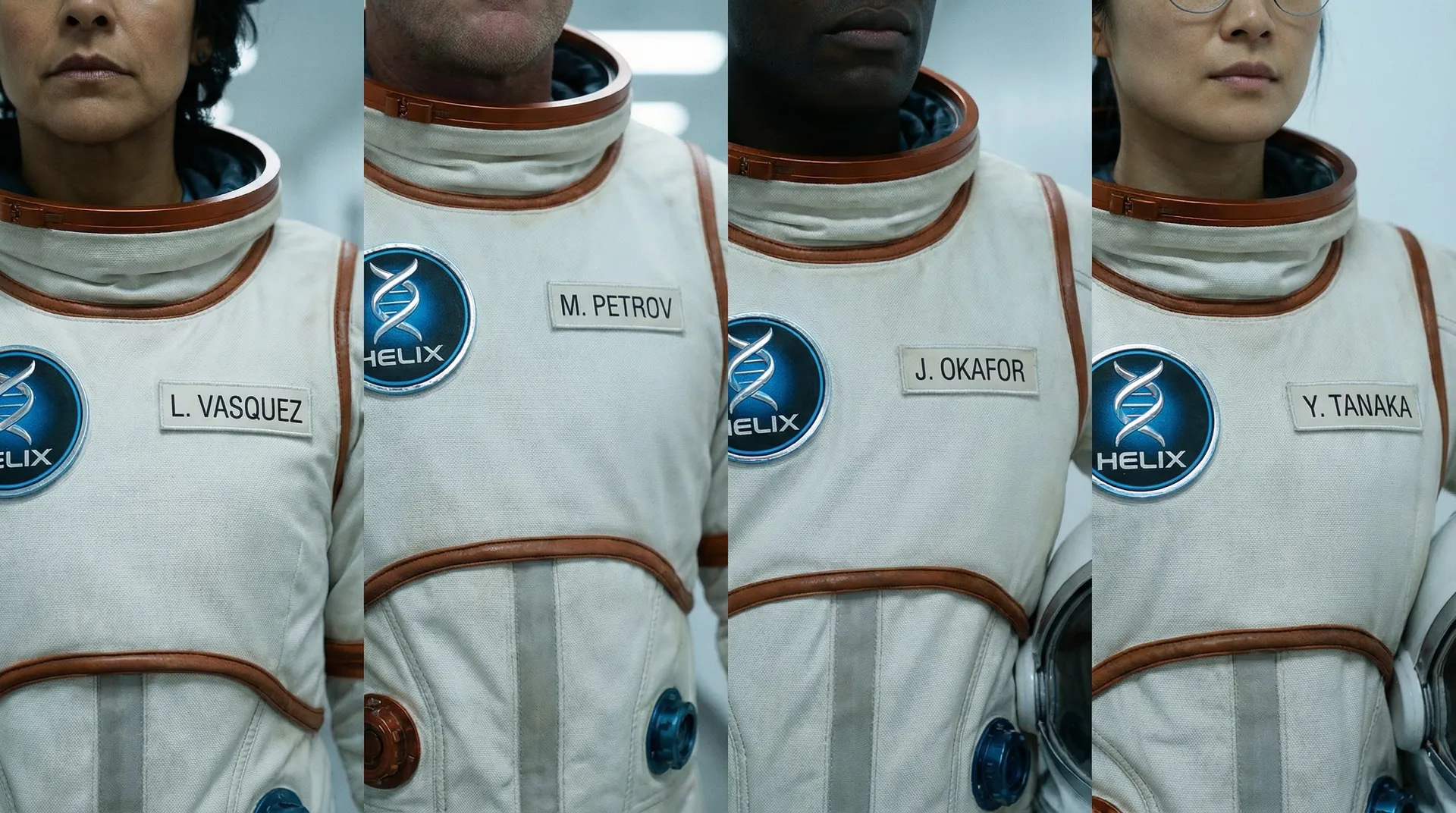
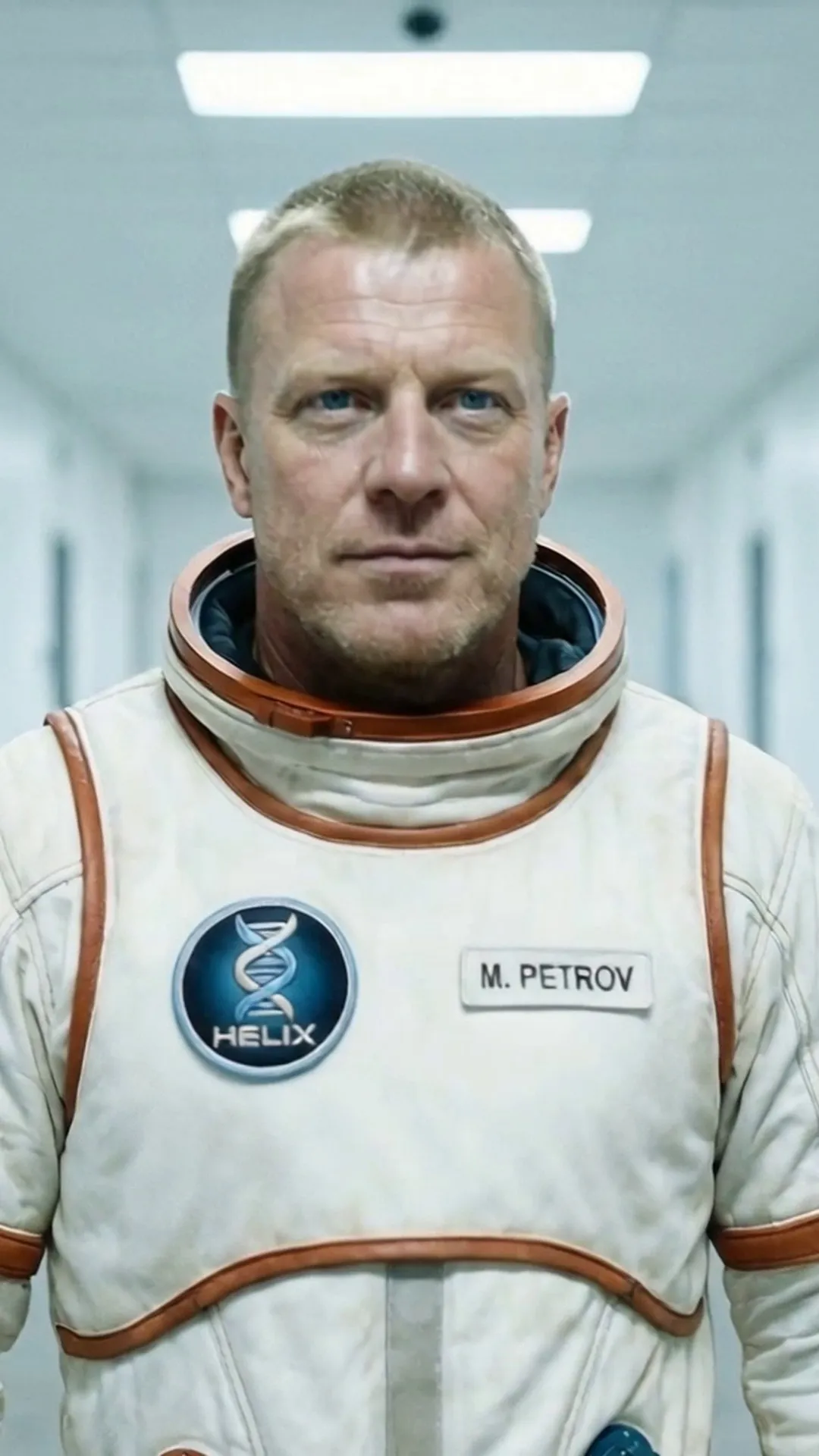
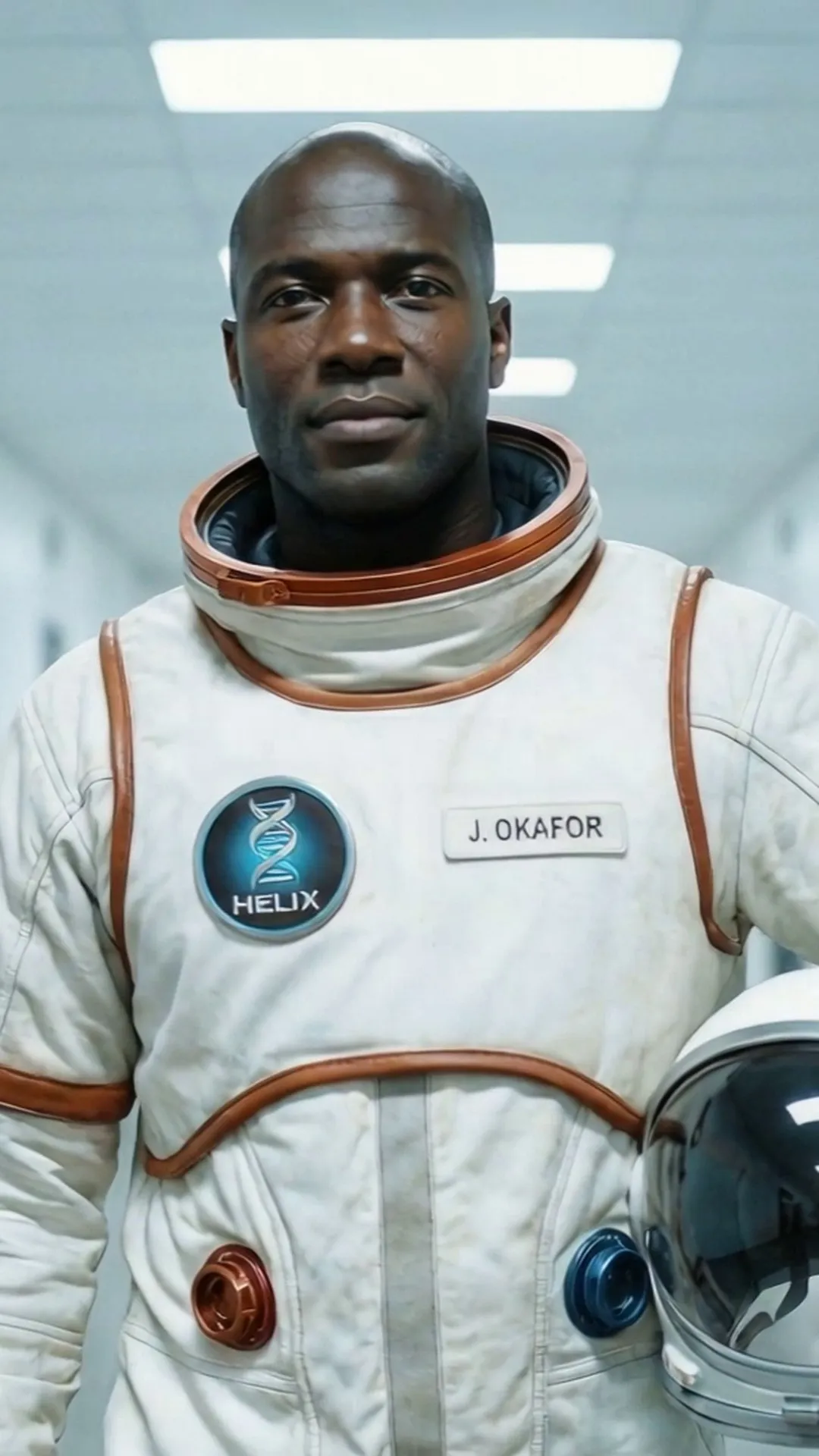
A long white corridor inside the facility. Four figures walk toward the camera in a line, helmets under their arms, and the shot tracks slowly across their chests so that we read the name tags in sequence: L. VASQUEZ. M. PETROV. J. OKAFOR. Y. TANAKA. Then each of them in turn, walking, eyes ahead. Mikhail, blonde buzz cut and blue eyes, with the look of a man about to do the thing he was built for. James, tall and broad, calm. Yuki, glasses catching the light, quiet. Lena, in front, the grey streak in her black hair, her face giving nothing away except that she has already said her goodbyes.
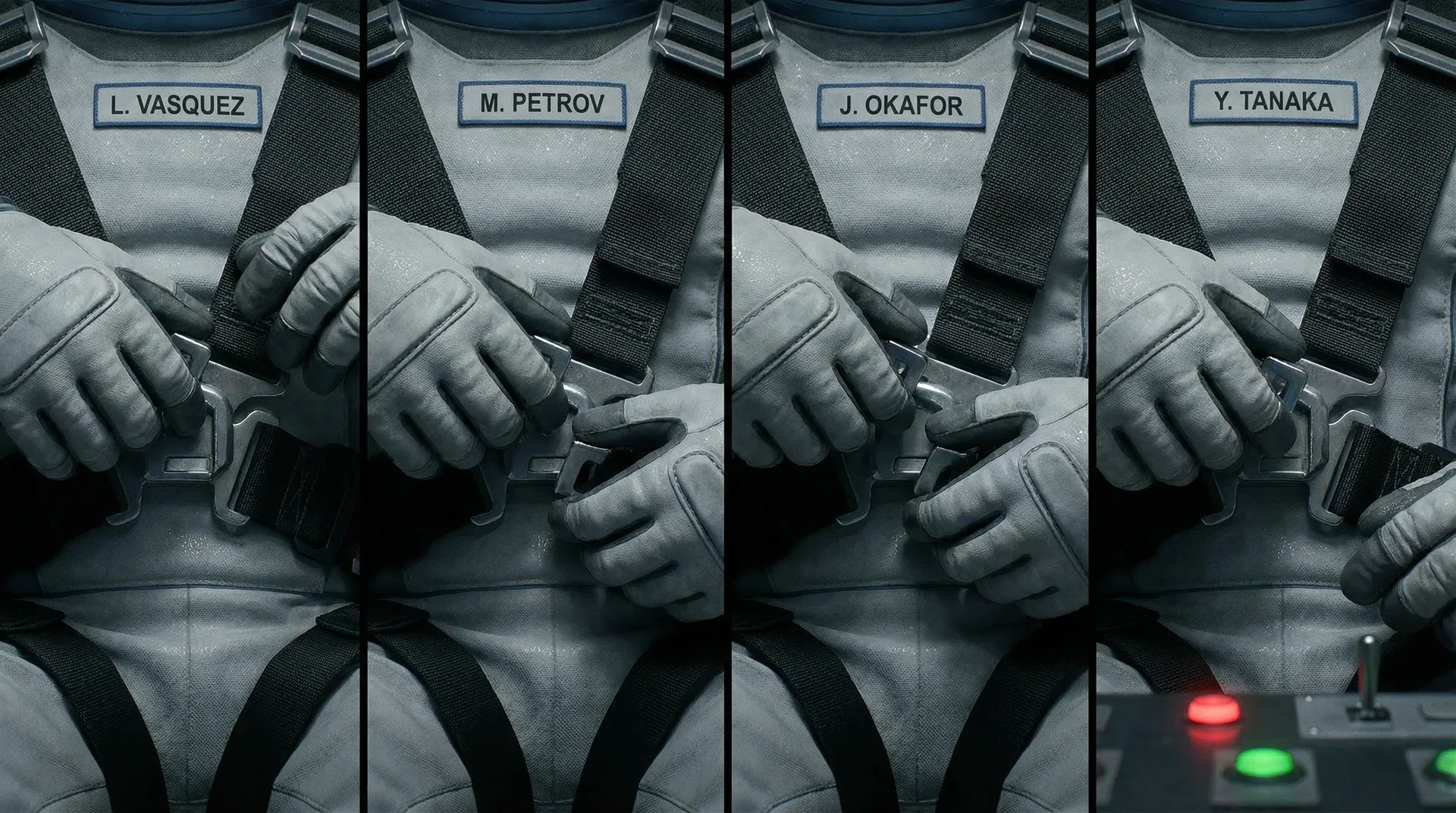
The gantry elevator takes them up the side of the rocket, a netted door sliding shut across the open air. At the top, the capsule. Inside it: four gloved hands in quick succession, each gripping a harness buckle and clicking it locked.
In Mission Control, Sarah Chen's lips move silently with the countdown. Blue light on her skin. Her eyes do not leave the screen.
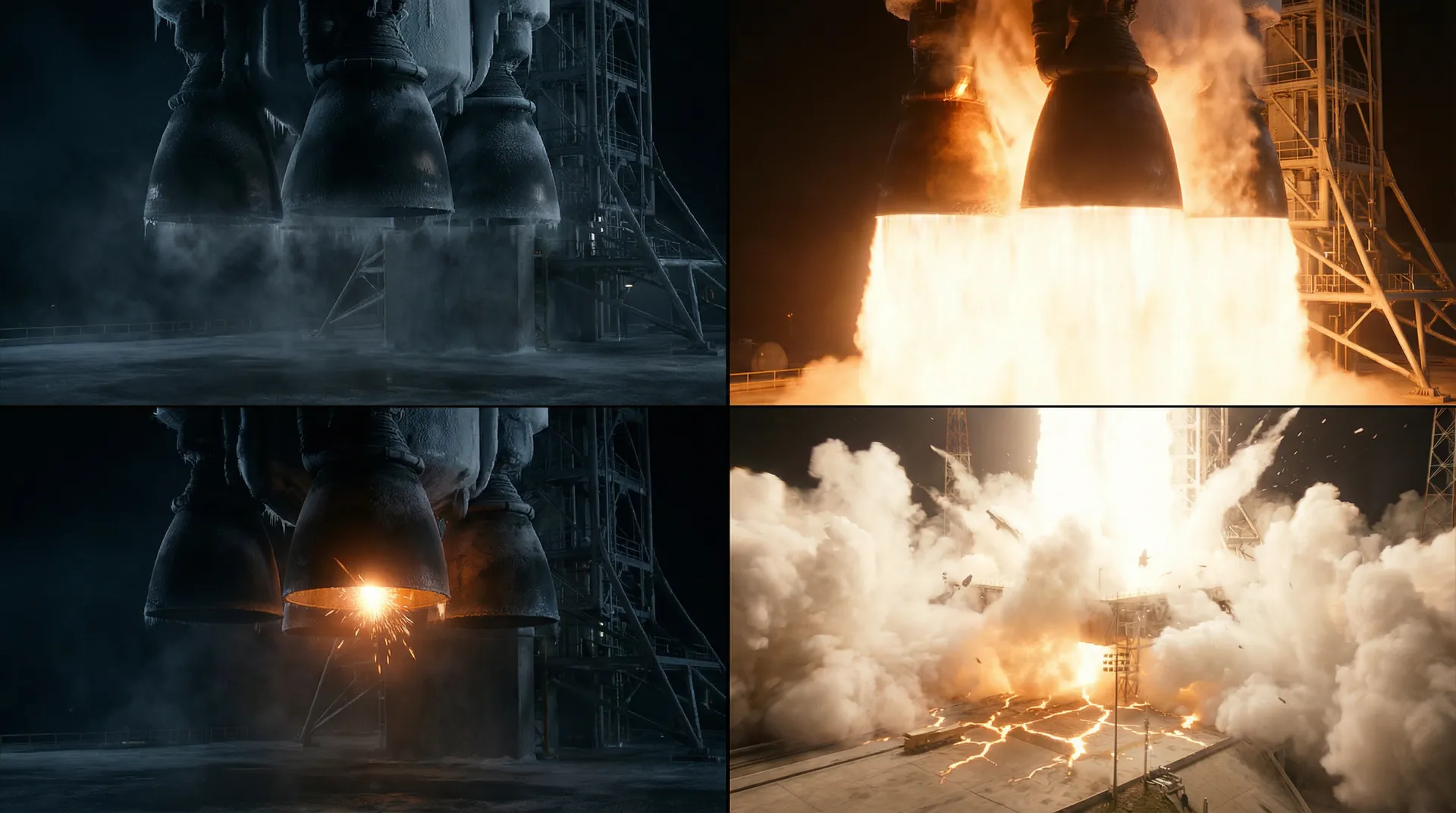
At the base of the rocket the engine bells hang dark and cold. Then a spark. A bloom of orange and white. Fire erupts across the pad, and the steam that has been drifting all morning becomes a wall.
The taiko drums arrive with it. The full HELIX rocket lifts off the pad in a column of fire, slowly at first, as if deciding, then faster, the lettering and the helix sliding up past the gantry and into the sky. The ground shakes. The light reaches the barriers and paints every upturned face gold, and the crowd's gasps become screams become cheers become something closer to weeping. People hold each other. A child is lifted onto shoulders.
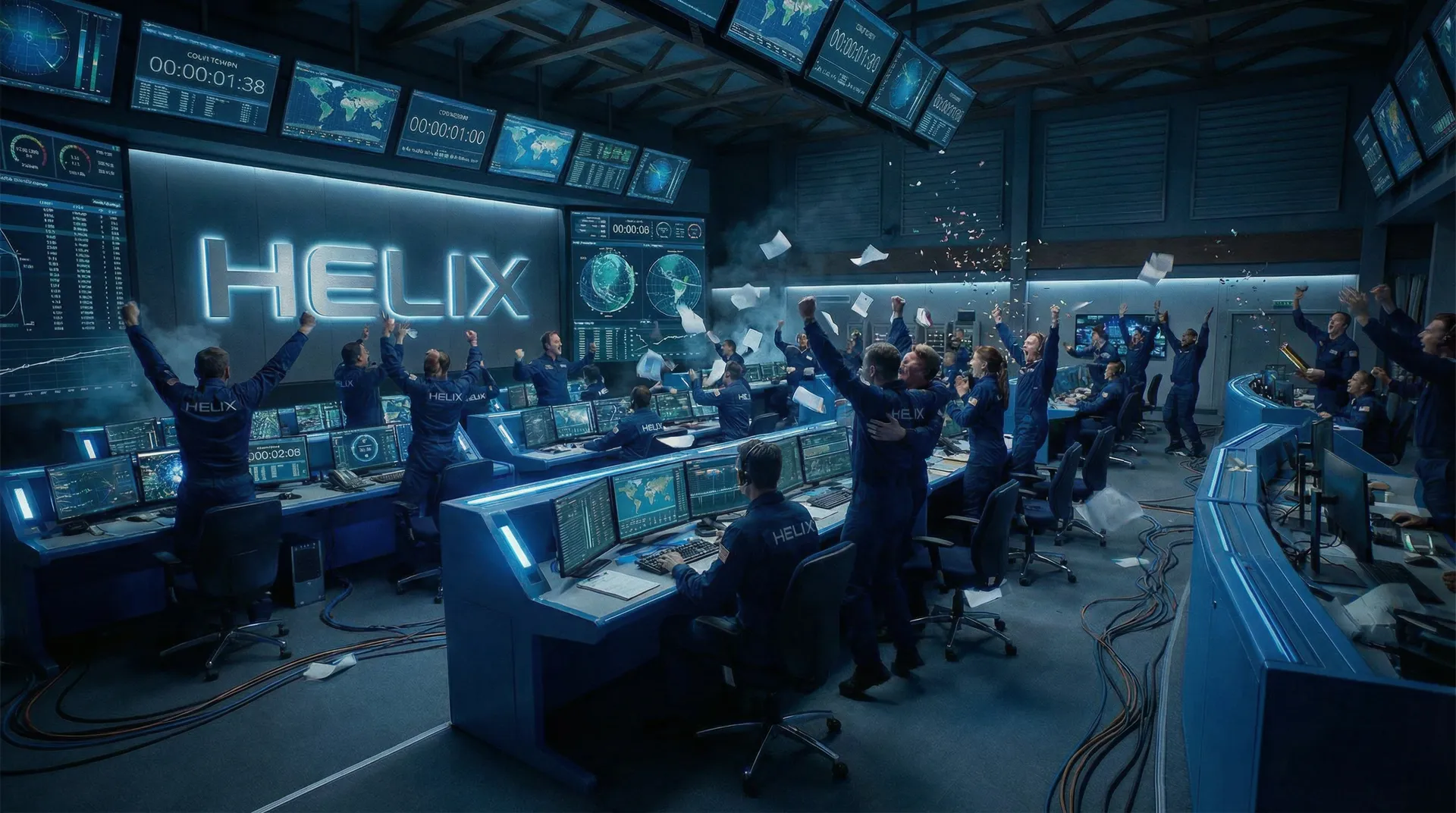
Mission Control erupts, technicians leaping to their feet with their arms raised, voices shouting over one another, the big panel on the wall showing the rocket climbing through a bank of storm clouds at dawn. And in the middle of it all Sarah Chen remains standing perfectly still at her console, one hand pressed flat on the desk, eyes tracking the rocket on the screen, tears streaming silently down her face. She does not wipe them away. She has work to do in a moment. Not yet.
The rocket punches through the clouds into clean gold light.
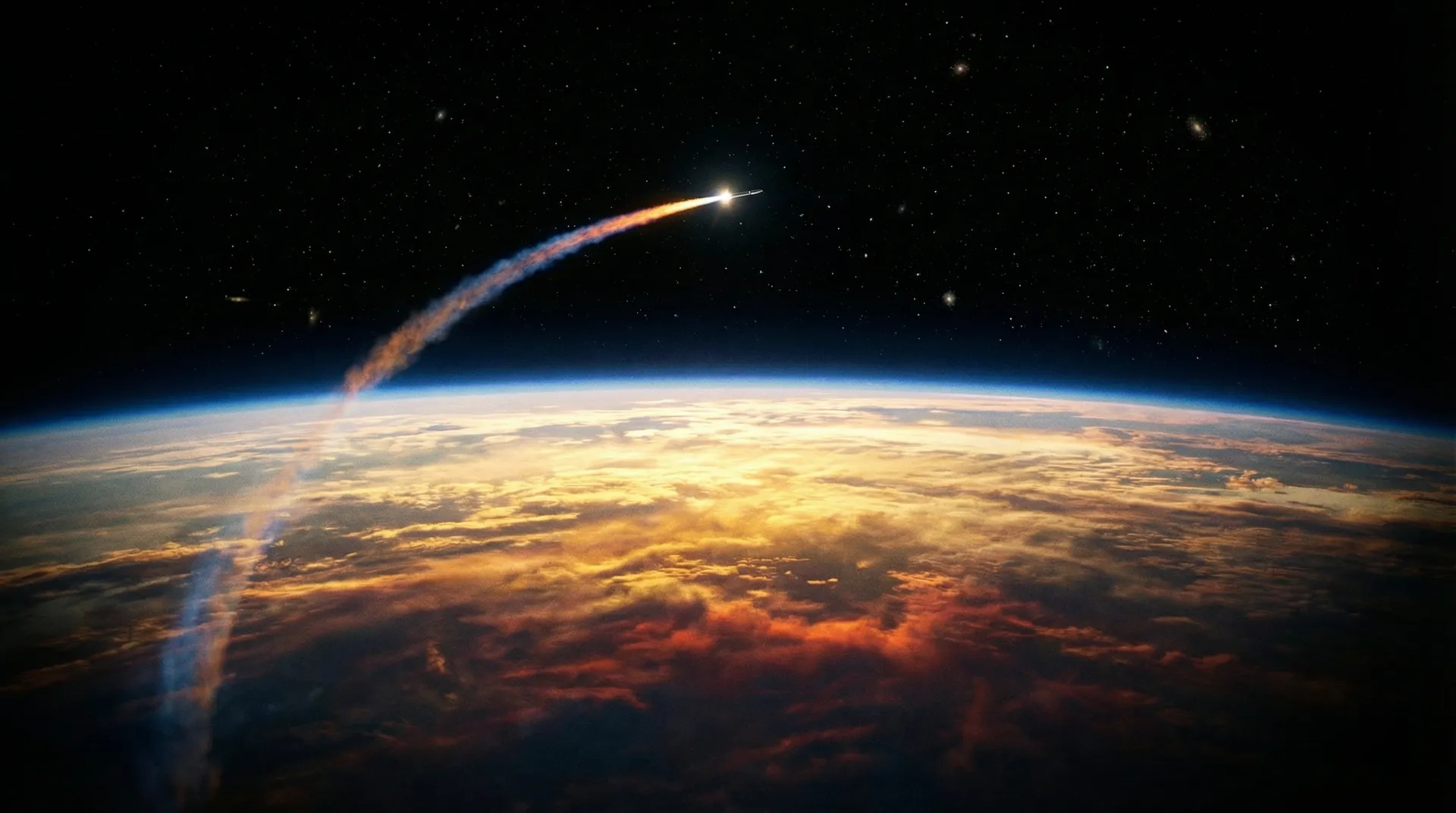
Then the final shot: near-orbital, the black edge of space above, the curve of a sleeping Earth below, and the HELIX rocket a tiny bright point of light trailing a fading arc of fire. Four people, going.